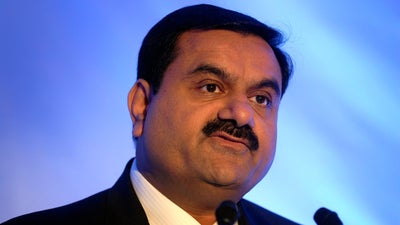
Guatam Adani.
By I.P. reporter.
NAIROBI, Kenya (AP) .
Kenya’s capital is under global scrutiny as allegations of corruption and financial misconduct surround Indian billionaire Gautam Adani.
Claims of backroom deals involving Adani Holdings and Kenyan officials have raised questions about governance, international collusion, and the growing financial burden on taxpayers in East Africa’s largest economy.
Adani, chairman of one of India’s largest conglomerates, is accused of misappropriating funds intended for Kenyan infrastructure projects.
Investigators allege that money earmarked for public development was diverted into private ventures through a network of shell companies and intermediaries.
While Adani’s business practices have been criticized internationally, this controversy highlights troubling local involvement.
Reports suggest Kenyan politicians may have enabled or profited from the alleged misappropriations, intensifying public mistrust in government institutions.
“This is more than just a corporate scandal,” said James Kariuki, a political analyst. “It reveals systemic flaws in our governance that make exploitation on this scale possible.”
The revelations come as Kenya contends with rising public debt and economic hardships.
The country’s debt, projected to surpass 70% of gross domestic product by 2025, has constrained funding for essential services such as education and healthcare.
The possibility that funds intended for infrastructure projects—such as roads and energy initiatives—were misused has infuriated citizens.
“Ordinary Kenyans are paying the price for corruption,” said Grace Nyokabi, a schoolteacher in Nairobi. “While we struggle with taxes and poor services, leaders enrich themselves.”
The scandal has also implicated Kenya’s political elite. Investigators have linked several influential leaders to Adani’s dealings, with allegations that some received bribes in exchange for awarding lucrative contracts.
Despite public outrage, authorities have yet to take significant action against those accused. Critics argue that Kenya’s anti-corruption agencies are failing to act decisively.
“Without accountability, this will be seen as business as usual,” said Dr. Wanjiru Mburu, a governance expert. “This is a critical test for Kenya’s institutions.”
The scandal has drawn attention from global financial watchdogs, with evidence pointing to offshore accounts and cross-border financial schemes.
Analysts warn that the controversy could damage Kenya’s reputation as a hub for investment and development aid.
“This raises questions about Kenya’s commitment to transparency,” said economist Samuel Ochieng. “Donors and investors will demand stricter oversight moving forward.”
The scandal has reignited demands for reforms to strengthen oversight and accountability in Kenya. Experts recommend:
Independent Investigations: Empower anti-corruption agencies to prosecute high-profile cases without political interference.
Contract Transparency: Mandate public disclosure of government agreements involving state resources.
Judicial Reforms: Accelerate corruption cases to ensure timely justice.
International Cooperation: Collaborate with foreign agencies to dismantle illicit financial networks.
For many, the Adani scandal is a tipping point in Kenya’s long-standing fight against corruption.
Civic organizations and the media are amplifying calls for justice, urging authorities to prioritize public welfare over political interests.
“This is a chance for Kenya to demonstrate its commitment to good governance,” said Nduta Mwangi, a civic activist. “The whole world is watching.”
As investigations continue, the stakes remain high for Nairobi’s leadership, Kenya’s taxpayers, and the country’s international reputation.
Ends.