


By Mwibanda
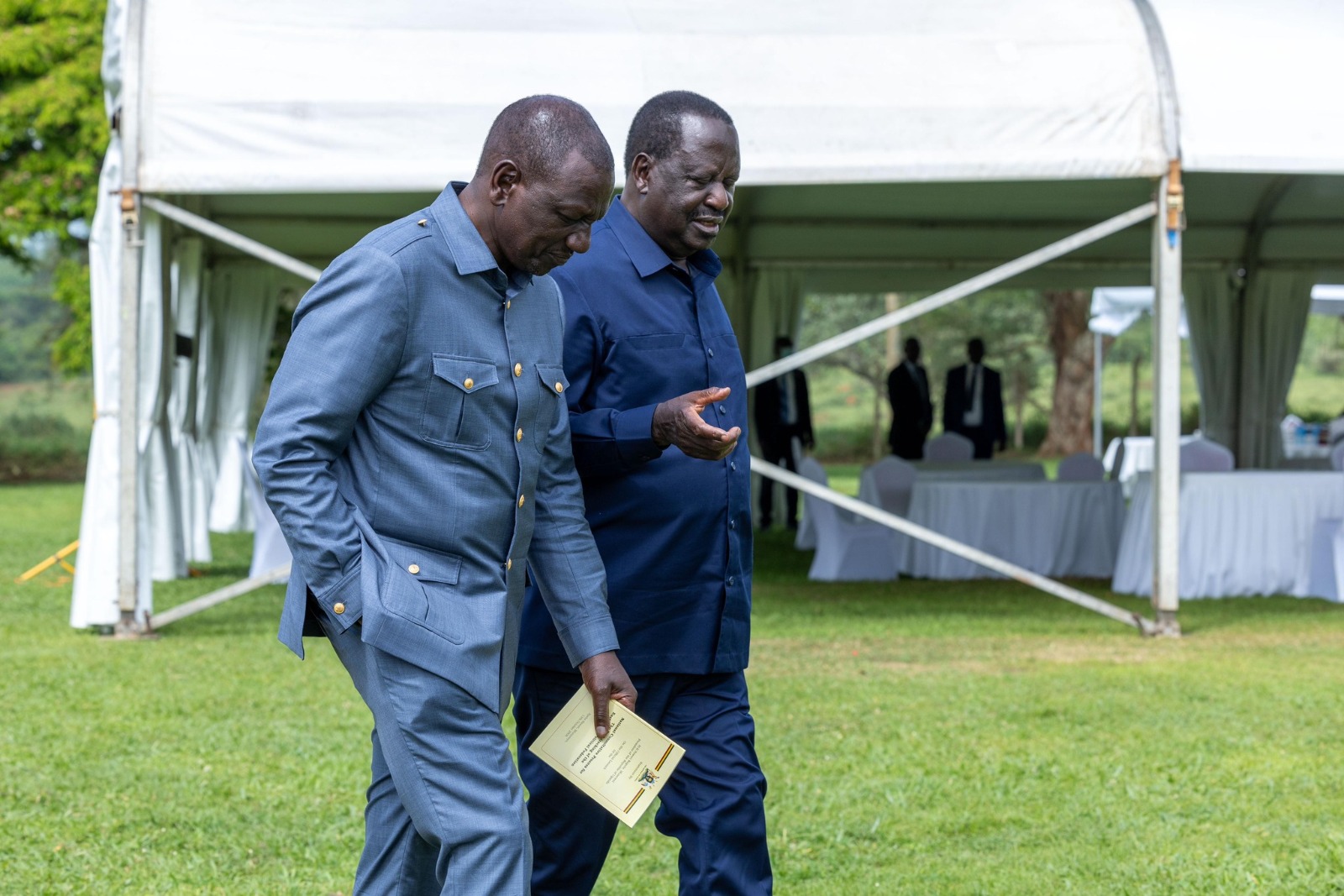
Recent political developments in Kenya have caused a stir, as President Raila Odinga’s recent embrace of a new political strategy has left prominent parties like Azimio, DAP-K, Jubilee, and Wiper grappling with uncertainty. This symbolic gesture—a hug between Raila Odinga and a key political figure—marks a significant turning point with far-reaching implications for Kenya’s political landscape.
The Political Context
Raila Odinga has long been a dominant force in Kenyan politics, leading the Azimio coalition and collaborating with various parties to challenge the status quo. Azimio, initially formed to unify opposition forces, has been a major player in shaping the nation’s political future. However, recent events suggest a potential shift in strategy that could fracture the coalition and affect its constituent parties.
The Hug and Its Implications
The recent hug between Raila Odinga and a prominent political figure is seen as more than a mere gesture of goodwill. It signifies a new political alliance or strategic recalibration, potentially leaving Azimio, DAP-K, Jubilee, and Wiper in a state of flux. This unexpected development raises questions about the future of these parties and their influence in the evolving political landscape.
Azimio Coalition: Once a stronghold of opposition unity, Azimio now faces an uncertain future. Raila Odinga’s new alliance could indicate a shift in priorities or a realignment of political strategies, potentially undermining the coalition’s cohesiveness and influence.
DAP-K: The Democratic Action Party-Kenya (DAP-K) has been a significant player in Kenyan politics, aligning with various coalitions for electoral success. The shifting dynamics may compel DAP-K to reassess its political position and strategy.
Jubilee Party: As a former ruling party, Jubilee’s role in the current political climate is critical. The party’s response to Raila Odinga’s new alliance could influence its future relevance and impact on national policy.
Wiper Party: Led by Kalonzo Musyoka, Wiper has been a key opposition player. The changing political alliances could affect Wiper’s strategic positioning and its ability to mobilize support effectively.
Analyzing the Impact
Raila Odinga’s new political alignment could reshape Kenya’s political landscape. For the parties left in political wilderness, the challenge will be to adapt and redefine their strategies to maintain relevance. This may involve forming new alliances, rebranding their political messages, or even reconsidering their leadership approaches.
Conclusion
President Raila Odinga’s recent political maneuver underscores the fluid nature of Kenyan politics. As Azimio, DAP-K, Jubilee, and Wiper navigate this new reality, their ability to adapt will be crucial in determining their future roles in Kenya’s political arena. The coming months will be critical as these parties reassess their positions and strategies in response to the shifting political environment.



