


By I.P reporter.
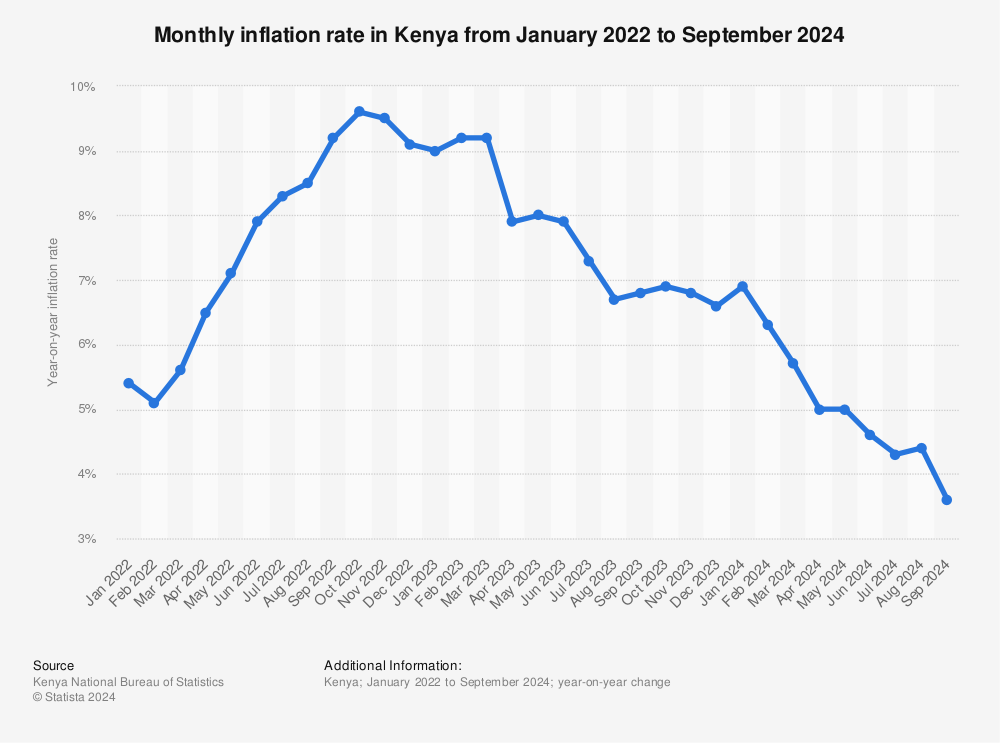
In October, Kenya saw a welcome easing of inflation, according to data from the Kenya National Bureau of Statistics (KNBS).
Despite a decrease in prices for essential services such as housing, transport, water, electricity, gas, and other fuels, many Kenyans are still grappling with increased economic hardships.
This paradox highlights the complexities of the current economic landscape.
Falling Prices, Rising Challenges.
The latest KNBS data reveals a decline in prices across various sectors, bringing a sense of relief to consumers who have been feeling the pinch of rising costs.
The drop in prices for housing and utilities is particularly noteworthy, as it directly impacts household budgets.
Reduced transport costs also alleviate some financial burdens, making it easier for individuals to commute for work or leisure.
However, the easing of inflation is not the whole story. Many Kenyans are experiencing a tightening of their budgets due to higher taxes implemented recently.
These tax increases have further squeezed incomes, leaving households with less disposable income despite the falling prices of certain goods and services.
The Tax Burden.
The Kenyan government’s approach to taxation, particularly during times of economic recovery, is a contentious topic.
While the intent may be to boost revenue for public services and infrastructure development, the timing and scale of these increases have raised concerns.
Many citizens feel that higher taxes, especially in an environment where the cost of living remains high, only exacerbate their financial struggles.
The Bigger Picture.
While the easing of inflation offers a glimmer of hope, it is crucial to consider the broader economic context.
Kenya’s economy is still recovering from the impacts of the COVID-19 pandemic, coupled with global economic uncertainties.
Many businesses continue to face operational challenges, and consumer confidence remains fragile.
Furthermore, the interplay between inflation rates and tax policies can significantly influence economic stability.
Policymakers must strike a balance between generating revenue and ensuring that citizens can maintain a reasonable standard of living.
Conclusion.
While the easing of inflation in October is a positive development for Kenya, it is overshadowed by the challenges posed by rising taxes and the ongoing economic recovery.
As Kenyans navigate these complexities, the need for thoughtful policy measures that support both economic growth and the well-being of citizens remains critical.
Stakeholders must work collaboratively to ensure that the benefits of a stabilizing economy are felt broadly across all segments of society.
Ends.



