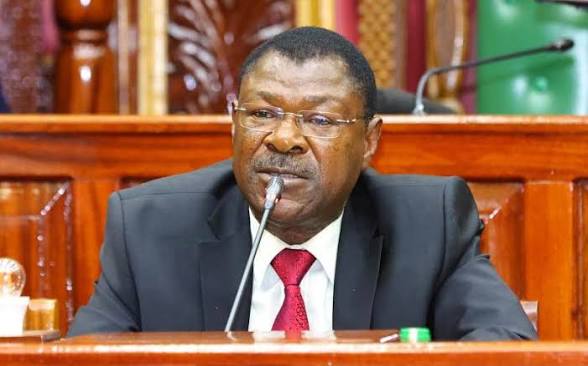
Speaker of the N.A. Dr. Moses Wetang’ula…Photo/courtesy
By IP Reporter
COMMENTARY
In the grand, theatrical arena of Kenyan politics, few spectacles match the supreme confidence of a leader caught in a constitutional paradox.
The latest act features National Assembly Speaker Moses Wetang’ula’s high-powered legal team storming the High Court to fight a highly inconvenient conservatory order.
The directive, handed down by Justice David Mburu, boldly suggests that Wetang’ula and Senate Speaker Amason Kingi should stop moonlighting as chief campaign mobilisers for the ruling Kenya Kwanza coalition while holding the nation’s highest legislative gavels.
The petition, brought by civil society group Vocal Africa, operates on the apparently radical theory that active, front-row partisan campaigning might compromise the strict neutrality required to run Parliament.
Wetang’ula’s lawyers, however, treated the concept of a non-political Speaker outside the legislative chamber as an adorable constitutional myth.
In a line destined for the archives of political satire, the defense team argued that expecting a career politician to stop politicking is like “asking a fish to ignore water.
“”The petition suffers from an acute case of terminal idealism,” noted one lead defense attorney, stifling a smirk outside the courtroom.
“To demand that the Speaker completely sever ties with the political machinery that birthed his career is a biological impossibility.
The Speaker does not live in a monastic vacuum; he lives in Kenyan reality.
“The defense team’s argument relies on a fascinating, almost supernatural premise: that a politician possesses the unique ability to partition his brain.
Inside the chambers, he is the strictly impartial custodian of order. The moment he steps outside, his tongue becomes entirely his own.
“To suggest he cannot separate the two is to deeply underestimate the multi-tasking capabilities of Kenyan leadership,” the defense confidently asserted.
“We are entirely confident that common sense—and a realistic understanding of political survival—will prevail.”
Yet, this “fish in water” defense swims directly into a net of uncomfortable precedents.
The petitioners remain entirely unswayed by the theatrical assurance, pointing out that previous judicial rulings have already found Wetang’ula’s dual role as Speaker and active leader of the Ford Kenya party to be thoroughly unconstitutional.
The courts have repeatedly reminded the legislature that the moment a member takes the Speaker’s oath, the partisan jersey is supposed to come off.
Vocal Africa’s petition cuts straight to the bone of this institutional crisis:the petition states.
“It entrusted the Speakers of Parliament with constitutional authority, not partisan advantage; with institutional stewardship, not electoral mobilisation.”
With the temporary ban tightly in place, the high-stakes political drama shifts to the crucial July 16 mention date.
The High Court will review responses from all parties before issuing further directions for a full inter partes hearing.
That upcoming session will decide whether Wetang’ula can return to the lucrative waters of the campaign trail, or if he must remain cooped up in the chamber, quietly holding his gavel.
For now, Wetang’ula remains entirely unfazed, seemingly operating under the time-honoured legislative doctrine that if you cannot convince the court with the law, you can certainly out-confident them with the vibe.
Ends.