


By Peter Marango Mwibanda
Political and Legal Analyst | Intellectuals Post
NAIROBI, Kenya (IP)
Kenya’s political landscape continues to shift dramatically as the country inches toward the 2027 General Election.
While President William Ruto and his allies have intensified nationwide political campaigns, growing public frustration over the high cost of living, unemployment, heavy taxation and perceived unfulfilled promises has increasingly shaped the national conversation.
The week’s political developments reveal a government that appears to have transitioned into permanent campaign mode.
Cabinet Secretaries, Members of Parliament and senior government officials have maintained an aggressive political presence across the country, announcing projects, launching initiatives and defending the administration’s record.
Critics, however, argue that many of these engagements are more political than developmental, raising concerns about the use of public resources for partisan mobilization.
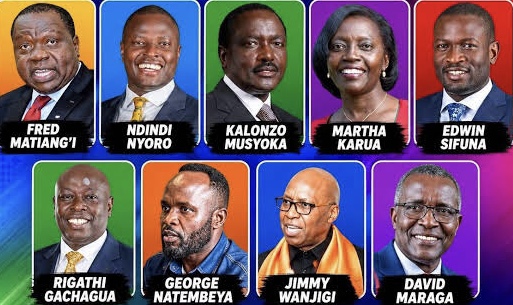
At the same time, Kenya’s opposition has entered a new phase of political consolidation.
Emerging alliances among opposition leaders suggest a growing realization that defeating an incumbent president requires discipline, unity and strategic coordination rather than individual political ambition.
Recent political realignments have given the opposition renewed momentum, positioning it as a credible alternative ahead of 2027.
Yet momentum alone will not secure victory.
History demonstrates that Kenya’s presidential elections are often decided by coalition-building and the ability to present a united front.
If multiple opposition candidates ultimately contest the presidency, they risk fragmenting the anti-incumbent vote and handing President Ruto a significant electoral advantage despite widespread public dissatisfaction.
The opposition’s greatest task, therefore, is not merely criticizing government policy but agreeing on one presidential candidate capable of rallying diverse political, regional and generational constituencies.
Personal ambitions must give way to a broader national interest if the coalition genuinely seeks to become the next government.
For President Ruto, incumbency remains a formidable political asset. Control of state machinery, visibility through official functions and the ability to influence the national agenda provide advantages unavailable to challengers.
These realities make the 2027 contest inherently unequal unless institutions charged with safeguarding electoral integrity remain firmly independent and impartial.
The broader concern extends beyond electoral competition.
Increasing political activity has coincided with growing questions over whether governance has become secondary to campaigning.
Many Kenyans continue to demand practical solutions to economic hardship, rising food prices, youth unemployment and mounting public debt rather than continuous political rallies.
International observers are also likely to monitor Kenya closely over the coming months.
As one of East Africa’s largest economies and a key regional diplomatic actor, Kenya’s democratic trajectory carries implications beyond its borders.
A competitive, peaceful and transparent electoral process will be critical to sustaining investor confidence and reinforcing the country’s democratic credentials.
Ultimately, the road to 2027 will not be determined solely by campaign rallies or political defections.
It will be decided by whether the government can convince citizens that it has delivered meaningful economic progress, and whether the opposition can transform its current political momentum into a united national movement with a single, credible presidential candidate.
The coming months will reveal whether Kenya is witnessing the early formation of a historic political transition or simply another cycle of shifting alliances.
What remains certain is that the battle for State House has begun in earnest, and every political decision made today will shape the country’s democratic future.
Ends.



