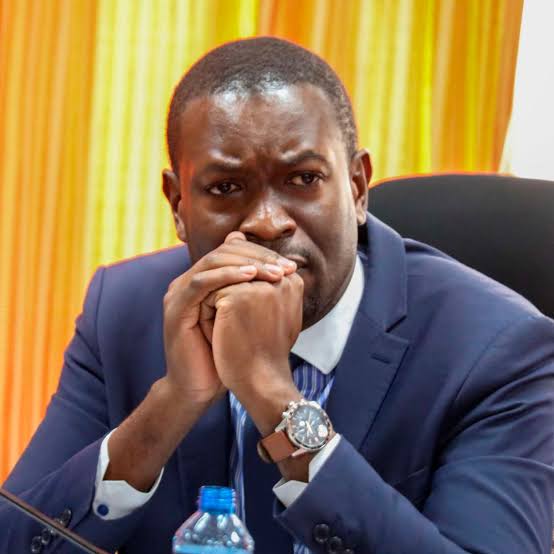
Nairobi Senator Edwin Watenya Sifuna……Photo/IP
By Peter Marango Mwibanda
Edwin Sifuna stands today at a defining crossroads in his political career.
The outspoken Nairobi senator has emerged as one of the few remaining voices within ODM willing to challenge the growing rapprochement between the party leadership and President William Ruto’s administration.
Yet the critical question remains: Is Sifuna fighting a battle he can realistically win?
For decades, ODM was more than a political party. It was a movement built around the charisma, resilience and reformist credentials of Raila Odinga.
The party’s identity was inseparable from Raila’s political journey. Whether one supported or opposed him, ODM’s fortunes rose and fell with his influence.
Today, however, the political landscape has fundamentally changed.
Following Raila’s gradual retreat from active opposition politics and his engagement with the Kenya Kwanza administration, many political observers argue that ODM has lost the combative spirit that once defined it.
The party that energized millions of supporters through opposition politics increasingly appears divided between loyalists seeking accommodation with government and those advocating an independent political path.
In this context, Sifuna’s determination to defend his position as ODM Secretary-General appears increasingly difficult.
Politics is ultimately a game of numbers, resources and influence. The reality is that state power often exerts enormous influence over political parties.
With sections of ODM leadership appearing comfortable with cooperation arrangements involving the government, Sifuna risks finding himself isolated within structures he is trying to reform from within.
History offers valuable lessons.
When Raila Odinga faced political setbacks, he often returned directly to the electorate.
After periods of political turbulence, he rebuilt his influence from the grassroots, winning elective positions and reconnecting with ordinary citizens before re-emerging on the national stage stronger than before.
Sifuna may need to consider a similar strategy.
His growing association with the Linda Mwananchi movement has attracted significant attention, particularly among Gen Z and millennial voters.
These demographics increasingly shape Kenya’s electoral outcomes and political discourse.
The youth-driven protests witnessed since 2024 demonstrated that younger voters are no longer passive observers but active participants capable of influencing national conversations.
Unlike traditional political formations built around ethnic kingpins and patronage networks, Gen Z voters tend to prioritize governance, accountability, economic opportunities and transparency.
This presents an opportunity for leaders willing to embrace a new political model.
Rather than expending political capital in internal ODM battles, Sifuna could potentially consolidate his support base among young voters and reform-minded Kenyans.
Such a platform would not necessarily need to be anti-ODM or anti-government.
Instead, it could position itself as a citizens’ movement focused on accountability, constitutionalism and economic justice.
The challenge, however, should not be underestimated.
Kenyan politics remains heavily influenced by regional alliances, ethnic arithmetic and established party structures.
Building a viable national movement requires resources, organization and sustained grassroots mobilization.
Popularity on social media does not automatically translate into electoral success.
Yet political history repeatedly shows that moments of transition create opportunities for new leadership.
The decline of established political orders often creates space for fresh ideas and alternative voices.
For Edwin Sifuna, the strategic question is no longer whether he can survive within ODM. It is whether his political future is large enough to exist beyond it.
If ODM has indeed entered a period of decline, then history may remember not those who fought to preserve its fading structures, but those who recognized the changing political tide and built something new.
The next chapter of Kenyan politics may not belong to parties of the past. It may belong to leaders capable of organizing the aspirations of a new generation.
And that is where Edwin Sifuna’s greatest political opportunity may lie.A counterpoint worth considering is that declaring ODM “dead” may be premature.
ODM still retains significant elected leaders, grassroots structures, and support bases in parts of Nyanza, Coast, Nairobi and other regions.
Political parties in Kenya have repeatedly survived leadership transitions and internal disputes.
The stronger argument may be that ODM is undergoing a transformation rather than a complete demise.
Incorporating that nuance can make the opinion piece more persuasive to a broader audience.
Ends.