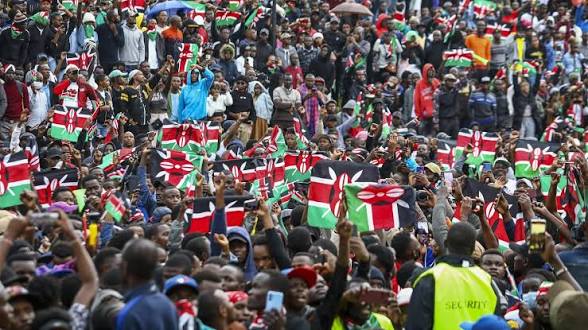
Gen Z protests in 2024…..Photo/IP
By Peter Marango Mwibanda
Political and Legal Analyst
NAIROBI, Kenya (IP) — A nation holds its breath.
From the corridors of State House to church pulpits, from bustling markets and business districts to boda boda stages in remote villages, a palpable sense of anxiety hangs over Kenya as the country prepares to mark the second anniversary of the historic Gen Z uprising that shook the foundations of government in 2024.
What was initially conceived as a day to honor the young lives lost during the anti-government protests has evolved into a moment of national reflection, political tension and unresolved grief.
Fear, suspicion and political posturing have gripped the country as questions linger over what tomorrow’s commemorations could become.
For many Kenyans, especially members of Generation Z, the anniversary is not merely a remembrance event.
It is a painful reminder of a chapter in the nation’s history that remains largely unhealed.
The government of President William Ruto has sought to calm nerves by assuring citizens that peaceful protests remain a constitutional right.
The administration has also promised compensation to families of those killed or injured during the demonstrations.
Yet many young activists argue that compensation alone cannot heal the emotional and psychological scars left by the deaths.
“Money cannot replace a life,” has become a common refrain among activists and families who continue to demand accountability.
To many Gen Z protesters, justice is not simply about financial compensation. It is about acknowledgment, responsibility and genuine reconciliation.
They insist that a personal apology from the government and the president would carry far greater symbolic weight than monetary payouts.
The demand raises a difficult question confronting the nation: Can a government truly compensate victims while avoiding a full accounting of what happened?
Across Kenya’s 47 counties, security agencies remain on high alert. Statements from senior government officials warning of possible infiltration by criminal elements have further heightened public concern.
Interior Cabinet Secretary Kipchumba Murkomen has accused what he describes as “political scavengers” of attempting to exploit the protests for political gain.
According to government officials, certain political actors may seek to capitalize on public anger and frustration to advance their own agendas.
Activists reject attempts to frame the movement through a partisan lens.
One of the defining characteristics of the Gen Z movement has been its leaderless and decentralized structure.
Unlike traditional political mobilizations organized around personalities or political parties, the movement emerged organically through social media, civic activism and shared frustrations over governance, taxation, unemployment, corruption and the rising cost of living.
That absence of formal leadership has made the movement difficult to contain, difficult to negotiate with and difficult to discredit.
The anniversary also reopens uncomfortable questions about the relationship between citizens and the state.
Can a democratic government use force against its own people and still maintain public trust?
Can national healing occur without accountability?
Can compensation substitute for justice?
These questions continue to divide public opinion.
Religious leaders have appealed for peace and restraint while urging authorities to respect constitutional freedoms.
Business owners meanwhile fear disruptions similar to those witnessed during previous demonstrations, while parents worry about the safety of their children.
Yet beneath the anxiety lies something deeper: a struggle over national memory.
The Gen Z uprising represented more than a protest against taxes or government policy.
It became a defining civic moment in which young Kenyans asserted their place in the nation’s democratic future.
The movement challenged long-standing assumptions about political participation, ethnic mobilization and generational power.
Two years later, the wounds remain fresh.
As dawn approaches on the anniversary, Kenya stands at a crossroads between remembrance and confrontation, between healing and polarization.
The outcome of the day may ultimately determine not only how the nation remembers those who died but also whether the country has learned the lessons their sacrifice sought to teach.
For now, Kenya waits and the nation remains on edge.
Ends.