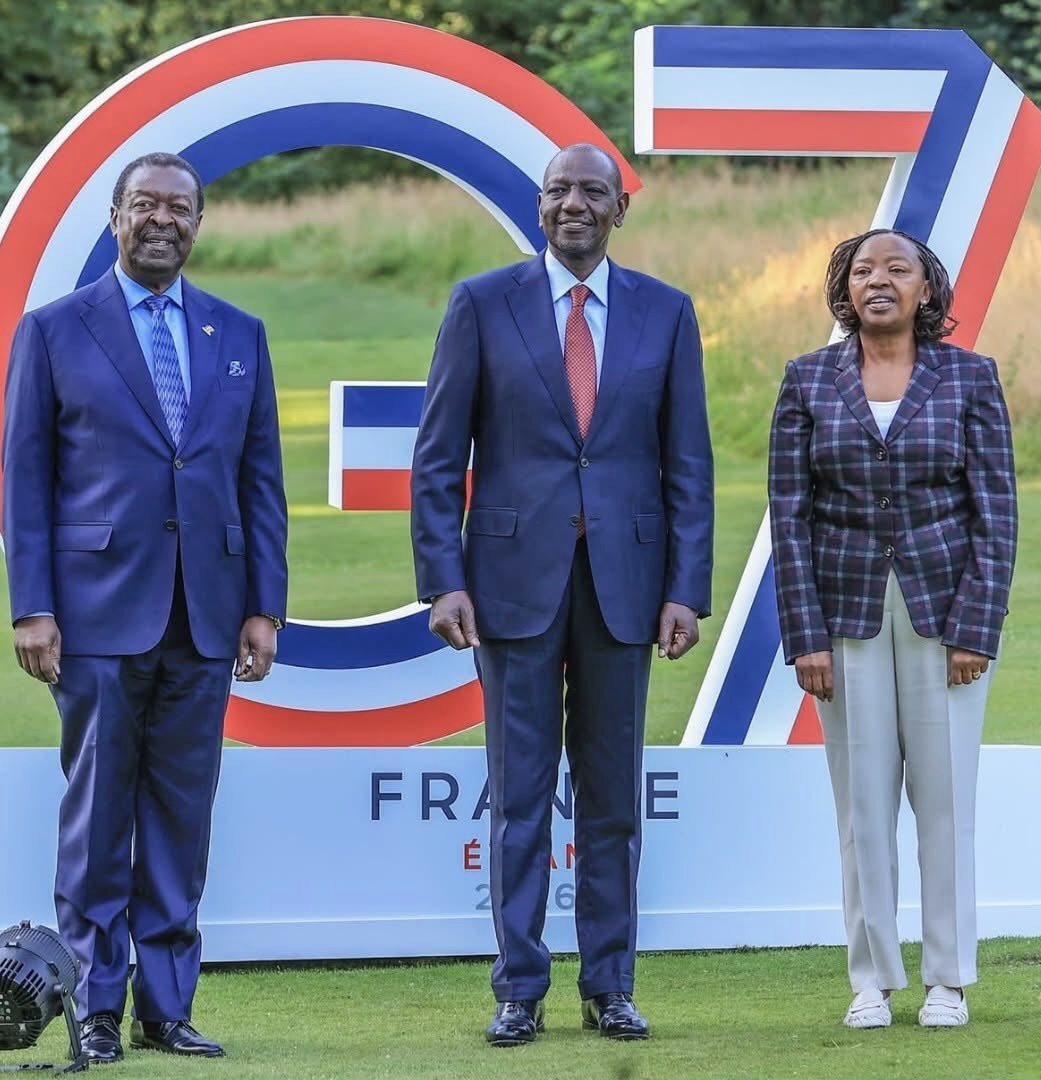
Prime CS Musalia Mudavadi(left),President William Ruto(center) and first lady Rachael Ruto at the G7 meeting in France….Photo/IP
IP ANALYSIS
France
In the grand, gilded halls of the G7 Summit, the West has officially selected its favorite African manager.
By extending an exclusive invitation to President William Ruto, Western powers have implicitly crowned Nairobi as the primary diplomatic conduit for a continent of 1.4 billion people—much to the absolute delight of the Kenyan treasury and the profound irritation of everyone else.
This solo invitation has effectively shattered the traditional diplomatic peer rivalry in Africa.
For continental heavyweights like South Africa and Nigeria, who usually expect a seat at the table to maintain geographical balance, Kenya’s solo flight is a severe diplomatic demotion.
While Pretoria flirts with Beijing and Moscow under the expanding BRICS umbrella, Paris and Washington have made their counter-move.
They have built an English-speaking, Silicon Valley-friendly firewall right in East Africa, completely bypassing non-aligned players.
“The message from the West is loud and clear,” said Dr. Sipho Mantula, a Pretoria-based geopolitical analyst. “If you want to play in the BRICS sandbox, you can watch from the sidelines.
Ruto has positioned Kenya as the dependable, pro-Western gatekeeper that blocks Chinese and Russian expansionism in sub-Saharan Africa.
“Naturally, this self-appointed role as “Africa’s Spokesperson” is causing significant sovereign friction across the continent.
Neighboring capitals are watching with quiet fury as Ruto lectures world leaders on global financial reform, carrying the “Nairobi Declaration” as if he were voted in as the continent’s CEO.
Yet, any grand plans by Kenya’s domestic opposition to run to regional leaders for help are dead on arrival.
For one, African heads of state strictly worship the holy grail of non-interference.
More importantly, Ruto currently serves as the official African Union Champion for Institutional Reform, meaning continental leaders are structurally tethered to his administrative updates.
Furthermore, the region is simply too dependent on Nairobi’s muscle to care about Kenya’s local tax complaints.
From deploying troops to the eastern Democratic Republic of Congo to anchoring fragile peace initiatives in Sudan, Kenya remains the indispensable peace broker.
“The opposition is fighting a domestic tax war while Ruto is playing a global chess match,” noted Timothy Kalyegira, an East African political commentator.
“Regional leaders will never jeopardize Kenya’s military and mediation backing just to console a local opposition group.
As long as Nairobi holds the keys to regional peace, Ruto remains completely untouchable.”