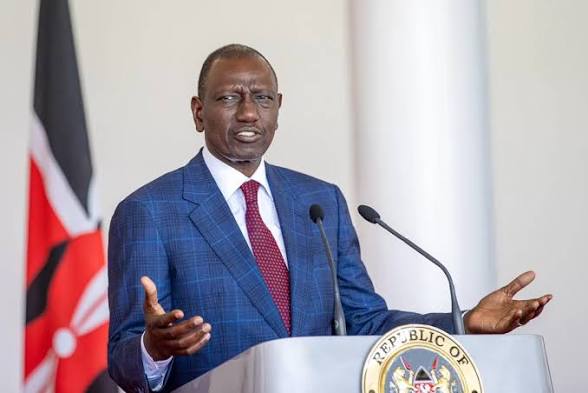
President William Ruto…Photo/IP
NAIROBI, Kenya (IP)
In politics, promises are currency. Leaders spend them generously during campaigns, hoping voters will cash them in at the ballot box.
When promises mature into disappointment, they become political debt — and debt, eventually, must be paid.
For President William Ruto and his United Democratic Alliance administration, that political debt may come due in 2027.
When he campaigned in 2022, he branded himself as the “hustler-in-chief,” a man of humble beginnings who understood the struggles of ordinary Kenyans.
His message resonated deeply with boda boda riders, mama mbogas, youth and millions trapped in a shrinking economy.
He promised transformation: lower cost of living, more jobs, affordable housing, universal healthcare and economic dignity.
Nearly four years later, many Kenyans are asking a painful question: What happened?
Across markets, villages and cities, a growing public sentiment is emerging — one laced with sarcasm and frustration.
Some jokingly say Kenyans may need “medical procedures” to believe government promises again because trust itself has been damaged.
That joke masks a serious political problem.
The cost of broken promises
The first and most potent missile aimed at the UDA regime is economic pain.
Kenya’s cost of living remains stubbornly high. Food prices, taxes, fuel, electricity and school fees continue to squeeze households.
For ordinary citizens, slogans about economic transformation have collided with harsher realities at home.
The “bottom-up” economic model that once inspired hope is increasingly viewed by critics as “top-down taxation.”
That perception matters.
Voters rarely punish governments over policy theory; they punish them over lived experience.
If citizens feel poorer in 2027 than they did in 2022, campaign messaging alone will not save UDA.
The Gen Z factor
Then came the rise of Kenya’s most disruptive political force: Gen Z protests in Kenya.
Young Kenyans changed the political equation.
Leaderless, fearless, and digitally organized, they rejected traditional tribal mobilization and demanded accountability, transparency, and economic justice.
Their anger was not just about taxes.It was about betrayal.
Many young voters feel political leaders — including Ruto — promised opportunity but delivered exclusion.
That resentment is unlikely to disappear by 2027.
It may instead harden into votes.
The credibility crisis
Every presidency eventually faces a defining question: Can the public still believe what the president says?
That is becoming Ruto’s central vulnerability.
Repeated promises on housing, jobs, debt relief, fertilizer subsidies, and anti-corruption reforms have been met with public skepticism.
Even when governments deliver partial progress, credibility matters more than announcements.
Once trust erodes, every speech sounds like campaign rhetoric.
Every pledge sounds recycled and every denial sounds defensive which is politically dangerous.
Internal cracks in UDA
The second missile is internal fragmentation.
Political parties rarely collapse because of external enemies alone; they weaken from within.
Tensions within Kenya Kwanza, friction with former allies and widening regional dissatisfaction suggest UDA cannot assume the coalition that brought it to power will remain intact.
The fallout with Rigathi Gachagua and signs of voter fatigue in key regions could cost Ruto critical numbers.
In Kenyan elections, perception often shifts before polling numbers do and for UDA perception is beginning to shift.
Kenya’s opposition remains fragmented, but UDA’s greatest risk may not be a single rival.
It may be collective public exhaustion.
History shows voters sometimes do not elect a new government because they love the opposition.They do it because they are tired of the incumbents.That is the danger facing Ruto.
If 2027 becomes a referendum on broken promises rather than policy achievements, the president enters the race politically wounded.
William Ruto remains a formidable political operator — disciplined, strategic and resilient.
Writing him (Ruto)off would be a mistake but elections are not won on past brilliance but on present trust.
Trust once broken, is hard to rebuild.
The missiles threatening UDA in 2027 are not opposition rallies or media headlines.
They are unpaid promises,frustrated youth,struggling households and disillusioned voters.
Unless that changes, the slogan that lifted Ruto to power may become the burden that pulls him down.