


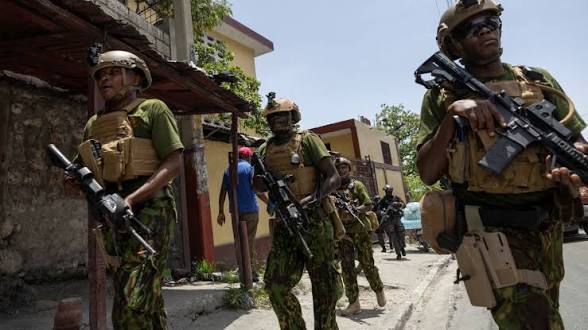
Kenyan soldiers at Haiti…Photo/courtesy
By Peter Marango Mwibanda
For Intellectuals Post
Nairobi, Kenya (IP)
As Kenya approaches the 2027 general election, a stark comparison is emerging: Singapore’s disciplined state-building versus Haiti’s institutional collapse.
This is not rhetoric. It is a warning.
Kenya stands at a fragile intersection where today’s political choices could consolidate a developmental state—or accelerate a slide into dysfunction, a path far easier to enter than to exit.
Singapore’s rise from a resource-scarce port to a global powerhouse was deliberate: strong institutions, zero tolerance for corruption and leaders who subordinated personal ambition to national interest.
The state maintained monopoly over force, enforced law uniformly, and resisted weaponizing non-state actors. Development was governance.
Haiti offers the opposite lesson.
Political actors outsourced power to informal, often violent networks that evolved into autonomous gangs, eroding state authority and fueling cycles of instability.
Once normalized, such actors rarely remain controlled—they outgrow their creators.
Kenya is not Haiti.
Its institutions function, economy is resilient and civil society remains vibrant.
But warning signs exist: normalization of politically aligned groups, organized street mobilization and tolerance of lawlessness during charged periods.
The danger lies in legitimization.
As 2027 nears, the temptation for short-term political gain will intensify. Each tolerated breach, selective enforcement, or alliance with informal power chips away at state authority.
The gravest risk is passive withdrawal—when the state “sits back,” signaling authority is negotiable and violence becomes currency.
Kenya’s path is not predetermined. Strengthening rule of law, rejecting violent proxies, ensuring accountability and empowering institutions are essential.
The election is a stress test. To reach Singapore, Kenya must decisively avoid Haiti—because collapse begins with choices.



