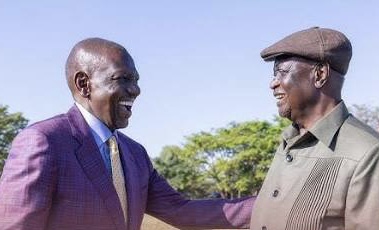
President Ruto (left)and ODM party leader Oburu Odinga…Photo/IP
By The Intellectual’s Post
NAIROBI, Kenya
Kenya’s political landscape is shifting, raising a pivotal question: Has William Ruto outmaneuvered the opposition movement built by Raila Odinga?
For decades, the Orange Democratic Movement (ODM) stood as a grassroots powerhouse championing reform and resistance.
Today, however, visible cracks suggest a movement under strain.
Analysts point to weakening internal cohesion, with some leaders appearing to drift toward accommodation with the government.
Critics call it a “quiet surrender,” fueling frustration among supporters who see ODM as a symbol of democratic resistance.
At the center is Ruto’s strategy. Since taking office, he has expanded influence into traditional ODM strongholds, forging alliances and reshaping loyalties at the grassroots.
Observers describe a calculated “divide and consolidate” approach that is steadily eroding ODM’s once-solid base.
Supporters of the president frame this outreach as inclusive governance, while critics warn it risks weakening opposition politics — a key pillar of democracy — and concentrating power.
For ODM loyalists, the moment feels like a betrayal of a legacy built on defiance.
Yet others argue it reflects political recalibration in a changing landscape.
As Kenya heads toward 2027, the stakes are high.
ODM’s resilience and Ruto’s continued expansion will shape not just electoral outcomes but the strength of opposition politics in one of East Africa’s most influential democracies.