


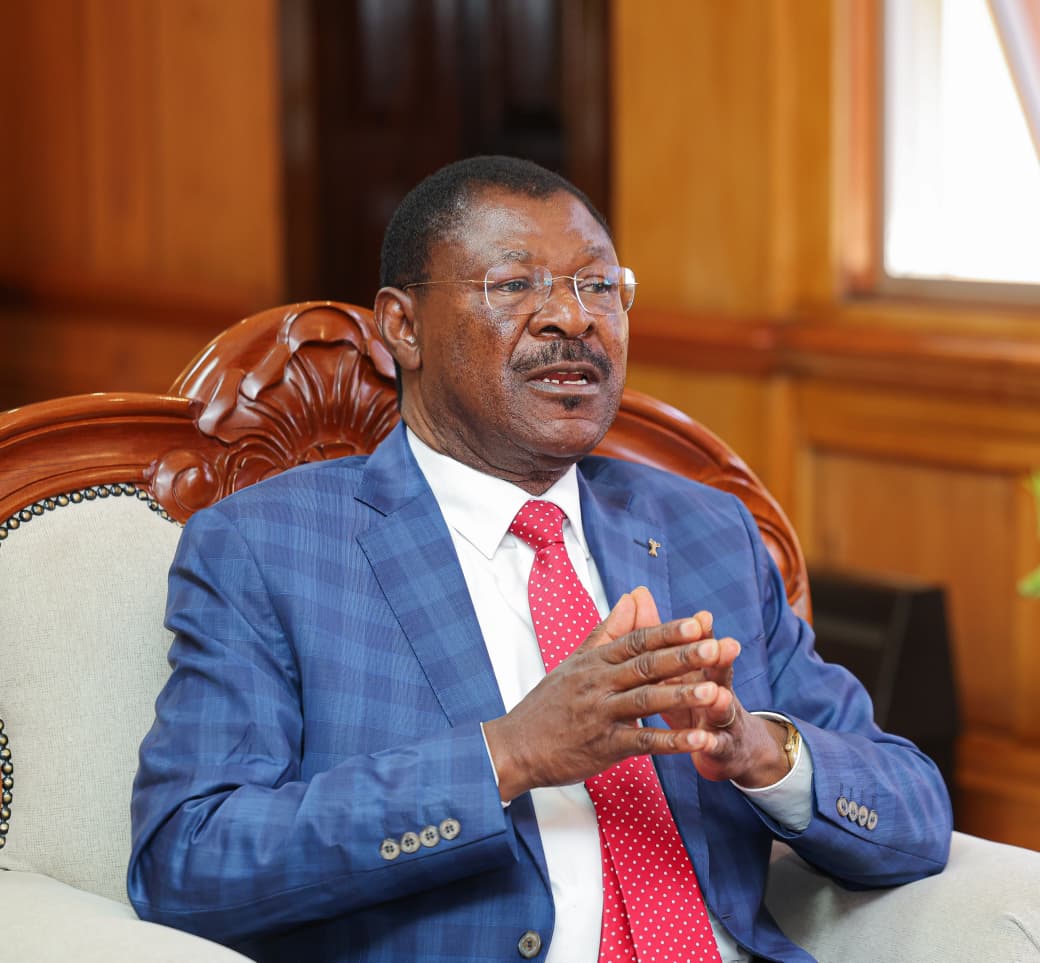
The Kenya Kwanza Principal Speaker Dr. Moses Wetang’ula……Photo/IP
By Pato
NAIROBI, Kenya
A key campaign promise to deliver Western Kenya a significant share of government positions is facing renewed scrutiny after Cabinet changes left the region with fewer top posts than initially agreed, even as a broad wave of development projects continues across the region.
During the 2022 election campaign, allies of President William Ruto, including Musalia Mudavadi and Moses Wetang’ula, backed a power-sharing arrangement pledging Western Kenya 30% of government appointments, six Cabinet Secretaries and PS positions conditional on the region delivering 70% of the vote.
The region instead delivered about 38%, with Raila Odinga winning the majority.
As of April 2026, Western Kenya retains the Prime Cabinet Secretary position under Mudavadi and the National Assembly Speaker role under Wetang’ula.
Cabinet representation includes Dr. Deborah Mulongo who replaced Ambassador Susan Nakhumicha in the health docket, while former CS for Sports and creative economy Ambassador Ababu Namwamba has since been redeployed as an ambassador to Uganda following his tenure in Cabinet.
President Ruto nominated Senator Consolata Wakwabubi and awarded seven positions to Western Kenya out of 51 Principal secretaries selected to serve in the Public service.
The principal secretaries picked from Western Kenya include James Muhati ,State Department for Economic Planning now the Counsul General for Guanzhou in China. He was replaced by Dr. Bonface Barasa Makokha .
Harry Kimtai is the Principal Secretary for the State Department for Mining while Prof. Edward Kisiangani, State Department for Broadcasting and Telecommunications who was later moved to the Presidents political advisors docket.
The others are Dr. Beatrice Inyangala ,State Departments for Higher Education and Research,Dr. Juma Mukhwana,State Department for Industry, Dr. Jane Kere Imbunya,the Principal Secretary for Public Service & Human Capital Development, Susan Auma Mang’eni , State Department for MSMEs Development,Samson P. Wangusi the Principal Administrative Secretary,Treasury,Bervely Opwora,Principal Administrative Secretary, Presidential Advisor on Women’s Rights Harriet Chigai, Interior and The Principal Administrative Secretary the Cabinet Office,Ministry of Interior, Arthur Osiya.
Beyond Cabinet, Western Kenya has also held representation in senior national institutions, including the Director of Public Prosecutions (DPP)Mr Renson Ingonga ,EACC chairman Bishop Dr. David Onginde,the Kenya Revenue Authority under Commissioner-General Humphrey Wattanga,Prof. Paul Wachana the KIPPRA board chairman,Former Bumula MP Mwambu Mabonga the Chairperson of the Public Benefit Organizations (PBO) Regulatory Authority while in the Kenya police structures the Deputy Inspector General (IG) of Police Gilbert Masengeli .
Others include the CBK Board of directors chairman Andrew Mukite Musangi ,Justus Wabuyabo the Chief Executive Officer Nuclear Power and Energy Agency ,Dr Chris Wakhungu Wamalwa the Chairman of the National Standards Council (NSC) which oversees the Kenya Bureau of Standards (KEBS)and Ms Sophie Nekoye Waliaula Non-Executive Chairperson of the Youth Advisory Board among others.
The President also appointed Major General Benard Waliaula,the Airforce Commander a position that had never been held by the western communities since independence.
Other notable positions include Ambassadorial positions:Ken Nganga Ambassador to UAE,Prof Anne Kisaka Nangulu to Senegal,Dr Susan Nakhumicha to the UN,Edwin Àfande to Viena and Ababu Namwamba to Uganda.
While the political balance remains contested, the government has intensified development projects across Western Kenya.
Major infrastructure works include ongoing road construction and rehabilitation across Kakamega, Bungoma, Busia and Vihiga counties, alongside expansion works at Kakamega Airport to improve regional connectivity and trade logistics.
In Bungoma County, the planned 7.8 billion Sichei Level 6 Hospital is among major health investments, alongside upgrades at Kakamega Teaching and Referral Hospital and other county health facilities.
In the sugar sector, revival efforts at Mumias and Nzoia sugar companies continue under government restructuring programs, though farmers still report delayed payments and uneven recovery of the industry.
Affordable housing projects are underway across Kakamega, Vihiga and Busia counties, with thousands of units under construction as part of the national housing program.
At the same time, modern markets are being built across major trading centers to support small businesses and local commerce.
Sports infrastructure projects include upgrades to Masinde Muliro Stadium in Kanduyi in Bungoma,Bukhungu stadium in Kakamega,construction of a stadium in Busia county and Vihiga Stadium, intended to host expanded regional and national sporting events once completed.
Additional development includes expanded last-mile electricity connectivity across rural households, a passport service center in Bungoma to improve access to government services and rehabilitation of Matulo airstrip to improve regional transport and emergency access.
As 2027 approaches, Western Kenya remains divided between two competing political narratives — one focused on unmet expectations in government appointments under the original 30% deal and another pointing to visible but ongoing infrastructure and development delivery across the region.
The gap between political bargaining and project implementation is likely to remain a defining issue in the region’s political calculations heading into the next election cycle.



