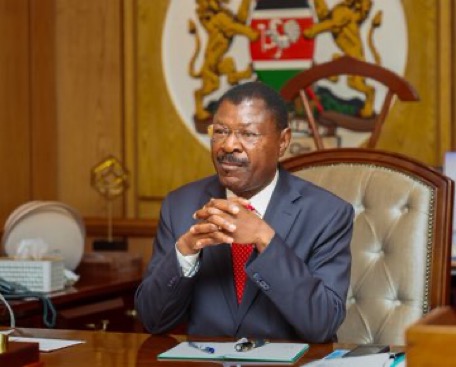
Speaker of the NA Dr Moses Wetang’ula ….Photo/IP
By Peter Mwibanda
Political and Legal Analyst, writing for Intellectuals Post
NAIVASHA, Kenya
As ordinary Kenyans tighten their belts to the last notch under punishing taxes, ballooning public debt and an unforgiving cost-of-living crisis, their elected representatives chose comfort.
Plush comfort. Five days of it.
Both Houses of Parliament—drawn from the ruling coalition and the opposition alike—retreated to Naivasha in a spectacle of excess that has ignited national outrage.
Sirens cleared highways for motorcades. Luxury vehicles flooded hotel car parks.
Five-course meals were served behind guarded gates as wananchi counted coins for unga, rent and school fees.
The optics were brutal. The message even worse.
At a time when households are collapsing under the weight of new levies, when youth unemployment festers and small businesses suffocate, Parliament appeared cocooned in privilege—aloof, insulated and disturbingly detached from the pain it helped legislate into existence.
Critics say the retreat was not merely tone-deaf; it was morally offensive.
Tens of millions of shillings were reportedly sunk into accommodation, allowances, logistics and security.
The justification—“legislative planning” and “capacity building”—rang hollow in a country where hospitals lack basic supplies, universities stagger under budget cuts and families are forced to choose between food and electricity tokens.
This was not governance. It was indulgence.
Kenya’s Parliament was designed to be the people’s House: frugal, accountable and grounded in the lived realities of its electorate.
Instead, Naivasha exposed a Legislature increasingly resembling an elite club—one that legislates austerity for citizens while reserving luxury for itself.
What angered Kenyans most was not just the money spent, but the symbolism.
Sirens slicing through traffic while boda boda riders are harassed for petty fines.
Lavish buffets while drought-stricken regions rely on relief food. Champagne politics in a country surviving on hustler economics.
The retreat deepened a troubling question already brewing in the public mind: Whom does Parliament truly serve?
In recent months, lawmakers have passed or supported tax measures that have driven up fuel, food and housing costs.
They have defended bloated budgets while preaching sacrifice to citizens. Naivasha, therefore, did not occur in isolation—it was the climax of a pattern of legislative arrogance.
For the first time since independence, Kenyans are openly asking whether these two Houses have become the most dishonorable Parliament in the nation’s history.
It is a damning verdict—but not an unfounded one.
Accountability has become selective. Oversight has grown timid. Public participation feels performative.
And now, fiscal restraint appears optional—at least for those who vote on it.
The political class may dismiss the public fury as social media noise. That would be a grave miscalculation.
Anger, when ignored, matures into memory. And memory, in a democracy, votes.
Are Kenyans ready to reflect this Parliament back to the ballot in 2027? Or will Naivasha stand as the moment voters decided enough was enough?
Time will tell. But history is unforgiving to leaders who feast while the people starve.
And Kenyans, watching closely, are keeping score.