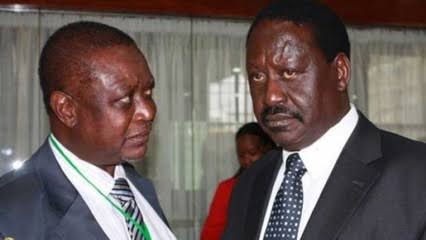
The late Raila Odinga (right)and his brother the current ODM party leader Dr Oburu Odinga…Photo/File
By Peter Mwibanda
In death, Raila Odinga has been transformed into a public relic — an open book rewritten daily by self-appointed interpreters, anxious relatives, political opportunists and eager heirs desperate to inherit not only his legacy but his relevance.
Suddenly, everyone who ever brushed shoulders with Raila now claims privileged access to his mind. Every casual acquaintance is recast as a confidant.
Every political hanger-on styles themselves as a guardian of his “true vision.”
It is less tribute than theater — a scramble for symbolic capital built on borrowed proximity to greatness.
What we are witnessing is not mourning. It is a political auction.
Nowhere is this more glaring than among those presenting themselves as Raila’s natural successors.
Oburu Odinga’s assertions of entitlement appear grounded more in lineage than leadership, more in surname than instinct.
His political posture has long been cautious, shadow-bound, and opportunistic — a man waiting for moments rather than shaping them.
There is an old family anecdote, often told in political circles: when Raila demanded fair nominations, Oburu would theatrically retreat into claims of illness, invoking departed relatives and prophetic family voices.
Raila, amused, reportedly laughed it off — and Oburu emerged with political accommodation rather than political merit.
Whether apocryphal or emblematic, the story captures a deeper truth: access has too often replaced ability.
Winnie Odinga, meanwhile, carries potential — but risks being prematurely crowned on the strength of blood rather than labor.
Lineage may open doors, but it cannot command loyalty. Political legitimacy is not inherited; it is earned through conviction, sacrifice, and intellectual independence.
The most telling reality is this: those claiming Raila’s mantle reveal how little they truly understood him.
Raila’s politics was forged in struggle, defiance, ideological consistency, and personal risk.
It cannot be inherited like property. Anyone who believes otherwise misunderstands both the man and the movement.
The future of ODM — one of the oldest and most influential political parties in East and Central Africa — hangs in the balance.
It faces a defining choice: evolve into a modern, merit-driven institution or shrink into a family museum of borrowed authority.
Oburu Odinga, by political trajectory and public perception, has little chance of shaping that future.
Relevance cannot be sustained on nostalgia alone, and political patience without vision fades into irrelevance.
Winnie Odinga may yet carve her own path — but only if she abandons entitlement and embraces the harder road of independent credibility.
ODM’s survival will not depend on who carries Raila’s name. It will depend on who carries his courage — without pretending to own it.