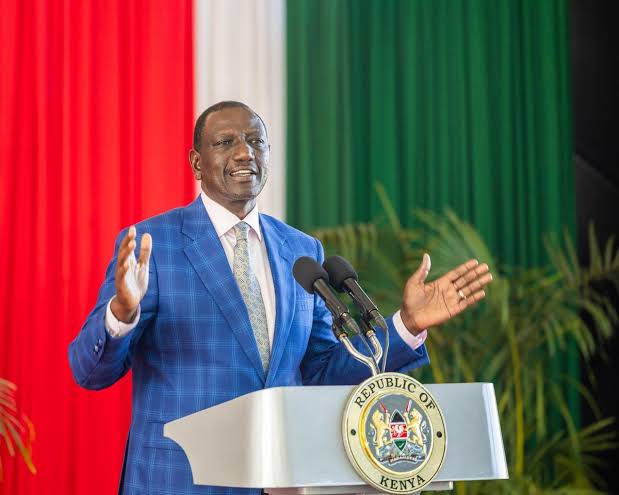
President Dr William Ruto
By intellectualspost team
NAIROBI, Kenya (IP)
The speeches are electrifying,promises are sweeping but y he ambition is almost imperial.
From building new cities, exporting digital workers by the millions, creating 5 million jobs, to slashing taxes while simultaneously expanding infrastructure , President William Ruto’s vision for Kenya often reads like a manifesto from a science fiction novel-One full of soaring ambition but suspiciously thin on execution.
The nation must now ask: Is the president biting off more than he can chew or is he deliberately selling a dream he knows is dead on arrival?
This is the uneasy crossroads where quixotic illusion, unintended failure and strategic deceit collide.
Ruto’s administration has become known not for what it delivers but for what it promises.
Every month brings another flashy pronouncement — a new housing estate, a new economic zone, a new digitization initiative, a new pan-African currency vision all wrapped in speeches that border on poetic.
But then, nothing.
No follow-through,no public progress reports,no timelines,no accountability but just a parade of headlines and then silence.
This has become a troubling pattern: governing by microphone, not by mandate.
Delusion or Deception?
At the heart of the problem lies a disturbing question: Does the president believe his own promises?
Or is he fully aware of their impracticality and merely uses them to manipulate public hope, knowing that by the time accountability is demanded attention will have shifted to the next shiny announcement?
As George Orwell wrote in Politics and the English Language, “Political language is designed to make lies sound truthful and murder respectable and to give an appearance of solidity to pure wind.”
President Ruto’s rhetoric often fits that mold uncomfortably well.
His promises are not just overly ambitious but they often defy economic logic, constitutional boundaries or fiscal realities.
Take the housing levy presented as a magic bullet for affordable housing. Critics warned of its unconstitutionality and poor planning.
The courts later agreed. Or the digital job exports with no global demand data to support the figures Or the fertilizer subsidies that failed to reach the actual farmers in time.
Is this incompetence? Idealism? Or a masterclass in political misdirection?
Manufactured Hope, Managed Disappointment
The genius of strategic deception is not to outright lie but to speak just enough truth to make the lie believable.
Ruto’s government knows how to speak the language of the people. “Bottom-up economy,” “hustler nation,” “digital revolution.” is political branding at its most effective.
Branding without results becomes a form of psychological warfare — managing public expectations downward while appearing visionary.
It creates an exhausted, disillusioned population that stops expecting actual delivery and becomes content with mere pronouncements.
Where Does the Buck Stop?
If the president is surrounded by incompetent advisors he must take responsibility for choosing them but if the ideas are noble but unrealistic then he is reckless with the truth.
If he fully knows that many of these projects are designed to fail or never materialize then he is not just failing; he is deceiving.
Kenya deserves a president who governs, not one who performs,a leader who builds policy not poetry.
The Danger of Beautiful Lies
In Orwellian fashion the more grand the promise the more dangerous the betrayal. Big lies are easier to sell because they appeal to big hopes.
Eventually the nation will wake up from slumber and realize that roads aren’t built, jobs don’t come, food prices remain high and the youth remain unemployed.
No speech no matter how polished can hide the truth.
The question is no longer whether President Ruto can dream big. It’s whether he is weaponizing dreams to escape responsibility.
And if that’s the case, then Kenya isn’t being led — it’s being seduced by illusion.
End