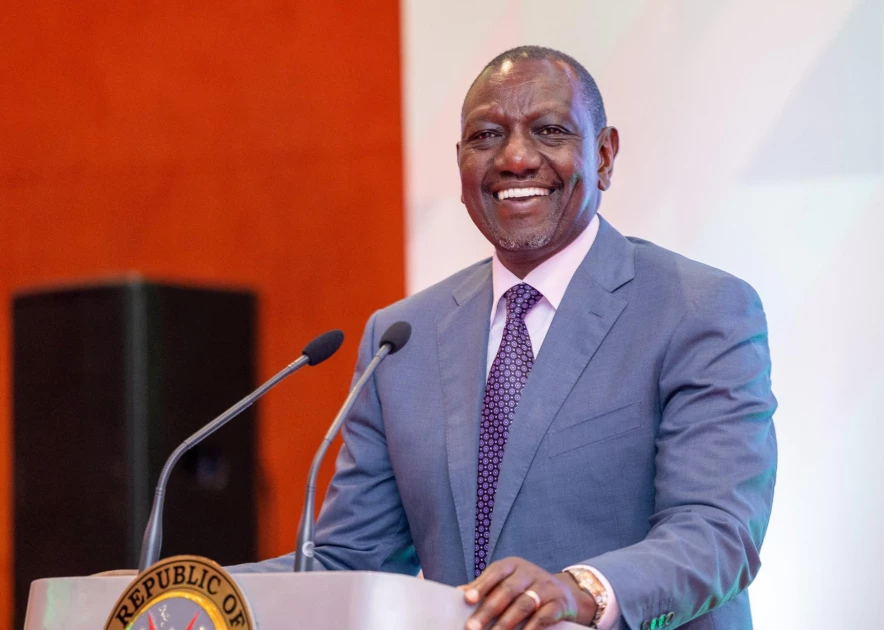
President William Ruto.
When Kenya passed the 2010 Constitution, it was hailed as a turning point in the nation’s democratic journey , a break from centralized power and a framework for inclusive devolved governance.
Ironically, one of the most vocal opponents of this new constitutional order was none other than William Ruto, then a Cabinet minister and prominent member of the “No” camp during the 2010 referendum.
Fast forward to 2022 and Ruto became the first Deputy President and eventually the second Head of State under the very Constitution he campaigned against.
Two years into his presidency, the question now lingers: Is President Ruto truly committed to upholding and implementing the Constitution of Kenya, 2010?
From Opposition to Beneficiary
In the run-up to the 2010 referendum, Ruto, then Minister for Higher Education, actively opposed the proposed constitution, citing concerns over land provisions and the structure of devolved government.
He aligned with other political figures in the “No” campaign arguing that the draft law would create legal and governance ambiguities.
Despite his opposition, the Constitution was passed by a 67% majority laying the groundwork for a new political order.
Ironically, Ruto would later become its greatest beneficiary.
The creation of the Deputy President’s office ,a new position under the 2010 Constitution elevated him to power in 2013 alongside retired President Uhuru Kenyatta.
By 2022, Ruto rose to the top, elected as Kenya’s fifth president and the second to govern under the new legal framework.
Two Years In: Is He Upholding the Constitution?
Two years into his presidency, public sentiment around Ruto’s leadership is growing increasingly critical.
Kenyans have expressed dissatisfaction with key aspects of his governance from the high cost of living to perceptions of overreach by the executive branch.
At the heart of these concerns lies a crucial question: Is Ruto governing within the spirit and letter of the very Constitution he once opposed?
1. Devolution Under Pressure
One of the hallmarks of the 2010 Constitution was devolution.
Yet, counties continue to suffer from delayed disbursements, budget cuts and what some governors term “economic sabotage” by the national government.
Critics argue that Ruto’s administration has not strengthened devolution but rather centralized more control in Nairobi — the very thing the 2010 Constitution sought to dismantle.
2. Executive Overreach and Institutional Independence
Recent appointments, alleged interference in independent institutions and the handling of dissent (especially following the 2023 and 2024 protests) have raised alarms about executive overreach.
Civil society groups and opposition leaders claim that Ruto’s government is undermining constitutional bodies like the Judiciary, the IEBC and the Public Service Commission.
These developments contradict the Constitution’s spirit of checks and balances and fuel concerns that the presidency may be drifting toward authoritarian tendencies.
3. Citizen Participation and Public Accountability
Despite constitutional provisions for public participation in policymaking, many of Ruto’s economic policies including tax hikes, the Housing Levy and controversial budget proposals have been implemented with limited consultation.
The backlash from the public, particularly young Kenyans has led to mass protests, signaling a disconnect between the leadership and the electorate.
Rather than embracing participatory governance, the administration appears to be pushing policies from the top down.
A Presidency in Tension with the Constitution?
The paradox of President Ruto’s rise is hard to ignore: a leader who fought against the 2010 Constitution now sits atop the very system it created.
As Kenyans reflect on two years of his presidency, they are not just asking about policy but they are also asking whether the president is truly committed to the rule of law and constitutionalism.
Was his opposition in 2010 ideological — or opportunistic? If it was the latter, what does that say about his governance today?
Conclusion: The Constitution Survived the “No” Vote — Can It Survive the Presidency?
The Constitution of Kenya, 2010, was designed to outlive political personalities.
Its survival depends not just on the text of the law but on the commitment of those in power to uphold it.
As President Ruto enters the third year of his term, he faces a defining test: to lead not just as a political survivor but as a constitutional statesman.
If he fails, it won’t just be his legacy that suffers — it could be the entire democratic project of Kenya.