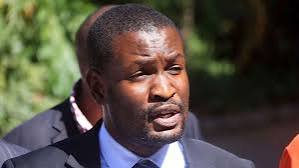
Nairobi Senator Edwin Sifuna.
By Peter Mwibanda.
NAIROBI, Kenya
The political terrain in Western Kenya is undergoing a seismic shift that could redefine the 2027 presidential race.
For President William Ruto and ODM leader Raila Odinga, the Luhya vote , Kenya’s second-largest ethnic bloc is proving increasingly unpredictable as new alliances, rivalries and youthful movements challenge the traditional order.
For decades, the Luhya vote has been courted, but rarely consolidated.
In 2022, Ruto managed a split, drawing in ANC leader Musalia Mudavadi and Ford-Kenya’s Moses Wetang’ula, while Raila retained key figures like Kakamega governor Wycliffe Oparanya.
In 2025, those alignments are showing strain.
Wetang’ula, Mudavadi, Oparanya, and even COTU boss Francis Atwoli are now seen as leaning toward Ruto’s side of the aisle, forming a political wall around the Kenya Kwanza administration in Western.
That wall is being reinforced by the Western Kenya Parliamentary Caucus, a bloc of MPs from the region rallying under Wetang’ula’s speakership.
The caucus, which counts more than two dozen legislators, has positioned itself as the official voice of Western Kenya in national debates but critics say it functions more as a pro-government echo chamber than a policy driver.
By tying its fortunes to Ruto’s re-election, the caucus risks alienating younger voters who are skeptical of old-guard politics and impatient for tangible results on jobs, education, and governance.
Meanwhile, a new generation of Luhya leaders is emerging — unbound by old loyalties and keen to challenge the status quo.
Nairobi Senator Edwin Sifuna, a Luhya with a strong following in both Nairobi and across Western, has positioned himself as the face of a “third force.”
After being sidelined in the broad-based government talks, Sifuna is reportedly aligning with outspoken Trans Nzoia governor George Natembeya, vocal MPs like Jack Wamboka, Caleb Amisi, and activist-senator Okiya Omtatah.
This coalition is seeking to mobilize a youthful, issues-driven movement that rejects both Ruto’s Kenya Kwanza establishment and Raila’s long-standing ODM dominance.
Their rallies and social media outreach are framed around corruption, unemployment, and governance reform — messages that resonate with Gen Z and millennial voters, who now make up more than 70% of registered voters in Western.
Adding to the complexity, Bungoma’s political dynamics were jolted when Tim Wanyonyi — brother to Wetang’ula and a respected MP for Westlands — entered the race for Bungoma governor.
His candidacy is forcing Wetang’ula into a delicate balancing act, managing family loyalty while safeguarding Ford-Kenya’s county dominance.
Meanwhile, Kimilili MP Didmus Barasa, once a staunch Wetang’ula ally,is showing signs publicly of joining forces with youthful leaders on breaking the ‘dynasty’ politics such as Kabuchai MP Majimbo Kalasinga aiming at reducing the Wetang’ula family hold on Bumgoma politics.
Tim Wanyonyi’s entry into the Bungoma gubernatorial race has made Barasa lend his voice to the rising “Tawe” movement a defiant, grassroots driven wave rejecting political co-option.
Their rhetoric is resonating among younger voters and disillusioned constituents eroding the traditional kingpin model that has defined Luhya politics for decades.
For Ruto, the challenge is acute. While Wetang’ula’s western caucus may deliver numbers in Parliament, the remaining Western MPs backing his re-election bid are seen as weak mobilizers on the ground and overlooking GenZ input in their campaigns for Ruto.
For Raila, who has historically depended on the Luhya bloc as part of his Nyanza-Western base, the defection of key allies to Wetang’ula/Mudavadi block and voter fatigue over repeated unsuccessful bids could cripple his influence.
The old guard faces a stark reality: survival in 2027 will require more than rally speeches and party loyalty.
They must work with vibrant youths through genuine empowerment and grassroots networking to avoid the growing perception among younger voters that all is lost under the current leadership.
In this climate any attempt to shortchange grassroots mobilizers would be political suicide, as Gen Z has shown it can turn apathy into organized rebellion almost overnight.
The big question is whether both camps the old-guard caucus under Wetang’ula,Mudavadi,Oparanya and the insurgent “third force” under Sifuna can capture and maintain Gen Z loyalty.
This is a generation that organizes online, distrusts political promises and has shown a willingness to vote against ethnic scripts.
If neither side offers tangible reforms and generational inclusion, the risk is not just fragmentation but political irrelevance for Western Kenya as a national power broker beyond 2027.
The stakes are enormous: No presidential candidate can win State House without a respectable share of the Luhya vote.
In 2027 that share will not be secured through backroom deals with political heavyweights alone but it will require speaking to a restless electorate that is younger, more skeptical and unwilling to be herded by ethnic loyalty.
If the current trends hold Western Kenya could be the kingmaker or the graveyard for political ambitions in 2027.
This time, it may not be Wetang’ula, Mudavadi,Oparanya or Raila calling the shots it could be the Gen Z and millennial leaders now shaping the “third force” politics in the region.
GENERATIONAL SHOWDOWN: WESTERN KENYA’S VOTER BASE
(Estimated IEBC 2025 register projections)
Gen Z (18–27 years) — 38% of registered voters; high social media influence, low trust in political elites.
Millennials (28–43 years) — 33% of voters; issue-driven but pragmatic key swing demographic.
Gen X & Boomers (44+ years) — 29% of voters; loyal to party and ethnic kingpins and decisive in rural turnout.
Implication:
Any coalition ignoring Gen Z and millennials risks ceding more than two-thirds of the Western vote a mistake that could turn the region from kingmaker to political graveyard in 2027.
Ends.