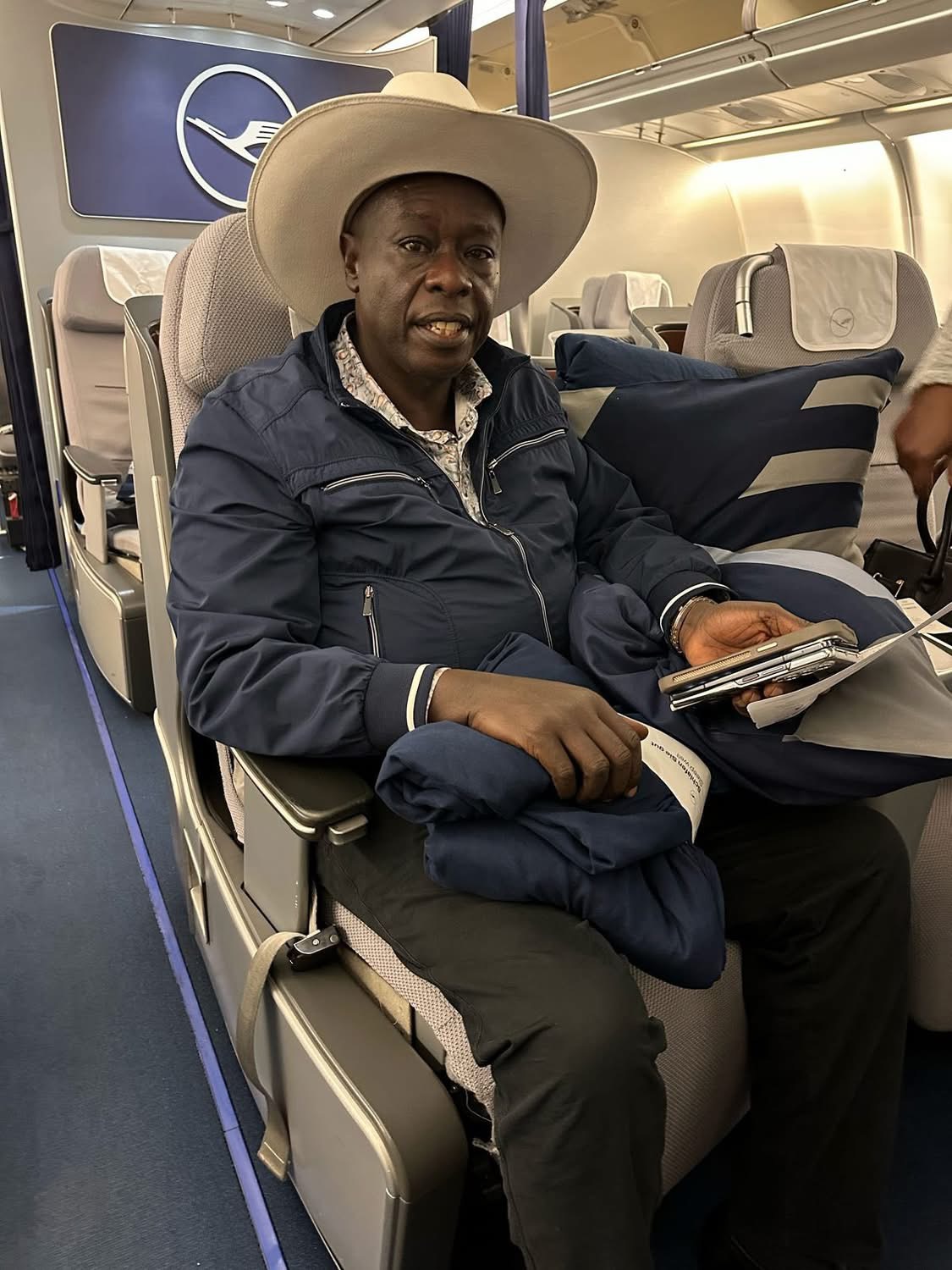
Rigathi Gachagua,the opposition leader leaves for the US on Wednesday to meet diaspora supporters.
Gachagua says the killings are state sponsored terror against innocent citizens.
By Peter Mwibanda.
NAIROBI, Kenya (IP).
In a small house in Kiambu, a six-month-old child now faces life without a father.
The man who once knelt in prayer, dreaming of raising his son with hope and dignity, was gunned down by police on his way home — his final journey marked not by love, but by bullets.
His story is one of many. Across Kenya, especially in the wake of recent anti-government protests, the blood of the innocent stains the asphalt of city streets.
The cries of unarmed youth marching for justice have been met not with dialogue, but with gunfire.
In Kitengela, 12-year-old Brigit Njoki sat in her living room, watching television.
A bullet tore through the walls of her sanctuary and into her body, ending her life in a space that should have been the safest.
She died without warning. She was not protesting. She was not armed. She was a child.
In the cold of night, a mother stood guard beside the lifeless body of her son, gunned down as he tried to flee the chaos. With no ambulance in sight and no authority willing to respond, she refused to leave him alone.
The silence of her vigil was broken only by the distant sounds of sirens — and the sobs of a nation in mourning.
A New Saba Saba, Marked in Blood
When thousands of Gen Z protesters took to the streets in early July to mark the 35th anniversary of Saba Saba, they carried signs, hopes and prayers — not weapons.
They chanted for justice, dignity, and an end to corruption and economic oppression. What they received were bullets — many fired from behind as they ran for safety, most never reaching it.
Eyewitnesses report that police fired live ammunition indiscriminately. At least 11 people were confirmed dead in one night.
Their bodies lay sprawled in alleys, roadsides and drainage ditches — streets turned into execution grounds.
“They were not criminals,” said Auma Odhiambo, whose nephew was among the dead. “They were dreamers. They were our future.”
A Pattern of Brutality.
The killings are not isolated. Since nationwide protests erupted in late June, more than 40 civilians — mostly young people — have died.
The Kenya National Commission on Human Rights and Amnesty International have condemned the use of excessive force, calling it a “systematic violation of human rights.”
Yet President William Ruto defended the police, recently suggesting they shoot protesters “in the legs.” Human rights groups argue such rhetoric has emboldened security forces to act with impunity.
“These are not accidents,” said Irungu Houghton, Amnesty International Kenya’s executive director. “This is state-sponsored terror.”
The Cost of Speaking Up.
Many of the victims were not rioters. Some were bystanders. Others were peacefully demonstrating.
All were citizens of a country that promised them protection under the 2010 Constitution.
Article 26 guarantees the right to life. Article 29 prohibits torture and cruel treatment.
Article 37 protects the right to protest peacefully. These are not privileges — they are rights. And they have been trampled.
“The state has declared war on its own people,” said constitutional lawyer Martha Omollo. “What we are witnessing is not law enforcement — it is political extermination.”
Grief Without Justice.
Back in Kiambu, the widow of the slain father clutches her child, her cries filling the air where lullabies should be. In Kitengela, Brigit’s school desk remains empty, her classmates lighting candles they barely understand.
No apology has come. No police officer has been arrested. No official has resigned. The silence from the state is deafening.
A Nation at a Crossroads.
Kenyans now face a question greater than political parties or finance bills: Do our lives matter to those in power?
The pain on the streets is real. The blood is fresh. And the fear is growing — that this may only be the beginning.
In the shadows of Saba Saba, as new generations rise to demand a better Kenya, the dream of justice is once again written in blood. But so is the courage.
Because even when bullets fly, the cry for freedom does not die.
Ends.