


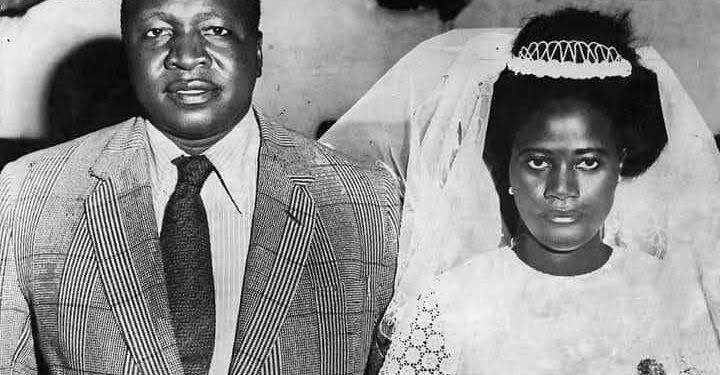
The late Idi Amin Dada with First Lady Madina in a wedding photo in 70s.
By IP reporter.
KAMPALA, Uganda.
President Yoweri Museveni of Uganda has drawn sharp criticism after granting former First Lady Madina Najjemba Amin — widow of deposed dictator Idi Amin — a monthly allowance of 15 million Ugandan shillings, along with a directive to build her a house, provide a 4×4 vehicle, and cover medical insurance.
The directive, dated November 9, 2023, has reignited public anger over Idi Amin’s brutal legacy.
His eight-year rule, beginning in 1971 after a military coup, remains one of the bloodiest periods in Uganda’s history.
Amin’s regime was marked by state terror, mass killings, and political purges. Victims included opponents, professionals, and members of specific ethnic communities.
Human rights groups and historians estimate that between 100,000 and 500,000 Ugandans were killed during his reign.
He also ordered the expulsion of tens of thousands of Asians from Uganda in 1972, confiscating their businesses and homes. The expulsion crippled the economy and sparked international outrage.
President Museveni, who has consistently condemned Amin’s rule in past speeches, surprised many by issuing the benefits package.
In his letter to Najjemba, he asked, “What happened to Idi Amin’s entitlements? Who took the money?” — a question that has fueled further debate over whether any former regime benefits were misappropriated.
Critics argue that rewarding Amin’s family is insensitive to victims and undermines the fight against dictatorship and impunity. Some political analysts say the move contradicts Museveni’s long-standing stance against tyranny.
Supporters of the gesture, however, argue that it reflects a spirit of reconciliation and support for individuals who may have suffered quietly in the aftermath of Amin’s fall from power.
Still, many Ugandans remain uneasy. Memories of disappearances, torture, and public executions under Amin continue to haunt families across the country.
The debate now turns to how Uganda balances historical justice with national healing — and whether this latest move sets a dangerous precedent or signals a broader shift in Museveni’s legacy politics.
— By IP reporter



