By Peter Mwibanda
NAIROBI, Kenya (IP).
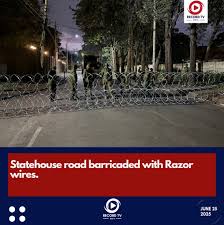
On the morning of June 25, Kenyans woke up to a stark, unsettling sight: Parliament and State House barricaded behind barbed wire and metal barricades.
The images spread rapidly online, igniting outrage and disbelief across a nation increasingly disillusioned with the direction of its democracy.
The fences, erected under the guise of security, did more than keep protesters at bay.
They sent a message—loud and chilling—that the state no longer trusts the people it serves. For many, the imagery recalled an era Kenya thought it had left behind: the colonial period, when those in power ruled through exclusion, force and fear.
“This is not just fencing,” one protester tweeted beneath a photo of Parliament encircled in wire. “It’s a mirror showing how far we’ve strayed from our Constitution.”
Once a symbol of citizen representation, Parliament now stood as a fortress—leaders huddled behind police lines while citizens demanded to be heard.
It was a scene that underscored the growing disconnect between Kenya’s political elite and the public, especially as frustration grows over rising taxes, a harsh cost of living and widespread allegations of corruption.
The decision to barricade the capital’s power centers appeared less about security and more about optics.
The optics were impossible to ignore. Where people expected transparency and access, they found steel and suspicion.
“Barbed wire sends a signal,” said one constitutional lawyer in Nairobi. “It says, ‘We fear you.’ That’s not democracy. That’s occupation.”
Many Kenyans likened the security lockdown to tactics used by the British colonial regime to suppress dissent and isolate nationalist voices.
Then, as now, power was protected by physical and legal walls.
The current administration has repeatedly insisted that its actions are about maintaining order and safety.
Civil society groups argue the state’s posture—especially in recent months—reflects a pattern of shrinking civic space.
In recent weeks, protests have surged nationwide, led largely by young Kenyans organizing online under the Gen Z banner.
Their demands are simple: fiscal justice, respect for rights and accountable leadership. Yet the response from government has often been defensive, even punitive.
On June 25, that response took physical form.
“It felt like a message,” said a university student who marched toward Parliament. “Like they were saying, ‘This is no longer your space.’”
Kenya’s Constitution guarantees the right to peaceful assembly, expression and petition.
Yet those rights seem increasingly difficult to exercise near the institutions that citizens are supposed to hold accountable.
Political analysts say the barricades could become a lasting symbol of a deeper crisis: a leadership class out of touch with the population and unwilling to engage in dialogue.
“If we’re building fences around public institutions, then we’re building a democracy of exclusion,” said a former commissioner with the Kenya National Commission on Human Rights. “And that’s a dangerous path.”
June 25 will not be remembered for the protests alone, but for what they exposed—a government unsure of its own moral authority, shielding itself from the very people it was elected to serve.
The barbed wire may have kept crowds out. But it also fenced in a fear that Kenya’s leaders must now reckon with: that people power, once awakened, rarely retreats quietly.
As history has shown, democracy doesn’t die in darkness alone. Sometimes, it is quietly fenced off—one barricade at a time.
Ends.