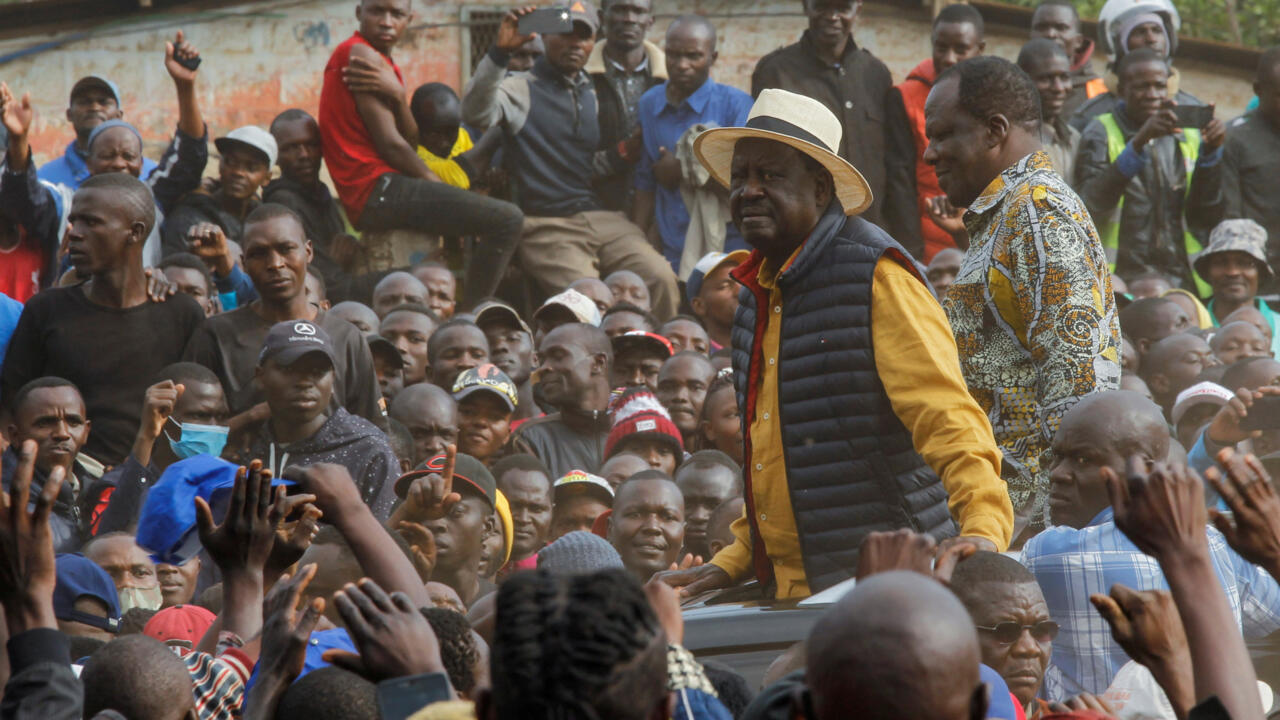
For decades, Raila Odinga has styled himself as Baba — the people’s champion, a tireless voice for the oppressed, the marginalized, and the forgotten. His name has become synonymous with resistance, reform, and the relentless pursuit of justice. But as Kenya’s political landscape shifts, a pressing question emerges: Has Baba remained true to the people — or has he perfected the art of turning national pain into personal political gain?
Time and again, Raila has stood at the center of national crises — not merely as a protester, but as a negotiator. Yet these moments rarely deliver deep, structural change. Instead, they often culminate in elite settlements that benefit his inner circle and secure short-term political advantage. From handshake deals to power-sharing arrangements, a familiar pattern unfolds: mobilize public outrage, channel mass frustration, then retreat to backroom negotiations whose outcomes seldom uplift the mwananchi.
This begs a deeper inquiry: Is this statesmanship — a seasoned leader leveraging protest for political inclusion — or calculated self-interest cloaked in the language of activism?
Today, Kenyans are awakening to a sobering reality. The much-touted “broad-based government,” once heralded as a blueprint for inclusivity, is fast becoming a burden. Living costs are soaring, corruption scandals are rampant, and political power remains in the hands of recycled elites — now draped in new titles and hollow promises.
In this climate of disillusionment, a fresh hunger is rising. Young people, professionals, and grassroots movements are demanding more than symbolic resistance. They want real accountability, transformative policy, and leadership that doesn’t fold at the table of privilege once the cameras stop rolling.
Now, the burden of proof lies with those who have long claimed to speak for the people. At this pivotal moment, can Raila Odinga truly reinvent himself — or will he remain a relic of a political era defined more by rhetoric and rewards than by results?
As Kenyans increasingly question the legitimacy of the so-called champions of the struggle, perhaps it’s time to ask the harder question: When will the struggle finally be about the people — not the perks?
— The IP Team