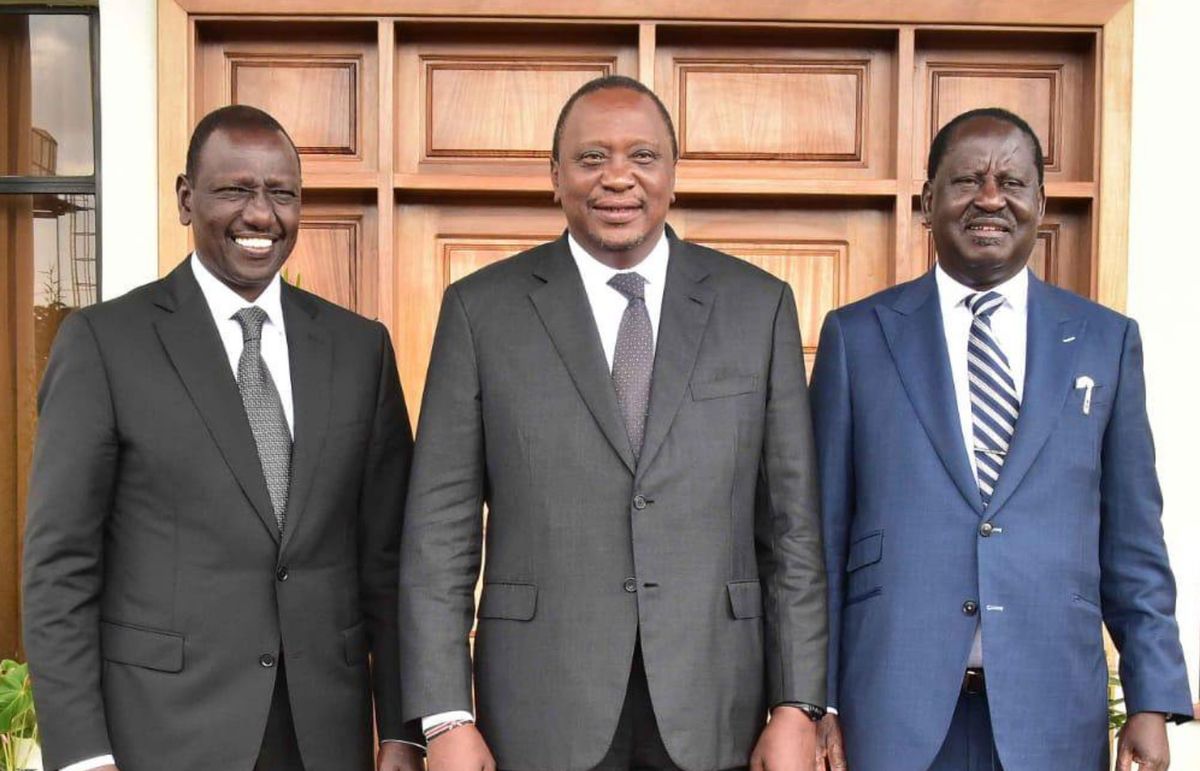
President William Ruto (L), Former President Uhuru Kenyatta (C), and Former Prime Minister Raila Odinga (R). The trio are poised to work together politically for ‘the prosperity’ of the nation.
By Peter Mwibanda.
Nairobi,Kenya.
For over 60 years, Kenyans have aspired to build a nation characterized by prosperity, justice, and dignity.
However, widespread issues like inadequate healthcare, lack of clean water, rampant unemployment, and systemic inequality remain pervasive.
The recent political maneuvering involving President William Ruto and opposition leaders Raila Odinga and Uhuru Kenyatta underscores a familiar pattern: alliances forged for self-preservation rather than public service.
Persistent Failures in Leadership.
Despite promises of change, Kenyan leadership across the Executive, Parliament, and Judiciary continues to disappoint.
Ruto’s government came to power on a platform of economic reform and empowerment of the “hustler nation” but has struggled to address rising costs of living, public debt, and unemployment.
Recent political developments — including discussions around forming a Government of National Unity (GNU) — have sparked public outrage and skepticism, especially among younger Kenyans.
A Coalition of Convenience.
The tentative coalition between Ruto, Raila, and Uhuru has drawn sharp criticism for being more about consolidating power than addressing citizens’ needs.
Raila’s apparent willingness to align with Ruto, after a contested 2022 election, has alienated parts of his support base.
Historical precedents show that such alliances — whether the 2008 post-election “handshake” or Kibaki’s unity government — often prioritize political stability over meaningful reform.
Growing Public Discontent.
Kenya’s youth, especially Gen Z, have been vocal in rejecting what they see as attempts to maintain the status quo.
Protests and movements calling for genuine leadership and accountability reflect a growing impatience with traditional political elites.
Opinion polls reveal dissatisfaction with government appointments and the persistence of corruption.
A Call for Change.
Kenyans must adopt a critical stance toward political narratives and promises.
True progress requires rejecting tribal and partisan divisions and demanding leaders who prioritize national development over personal interests.
Only through collective action, transparency, and accountability can Kenya realize its long-overdue promise of prosperity for all.
Now more than ever, the power to redefine Kenya’s trajectory lies with its people.
The question remains: Will the electorate hold its leaders to higher standards, or will another cycle of political compromise prevail?
Ends.