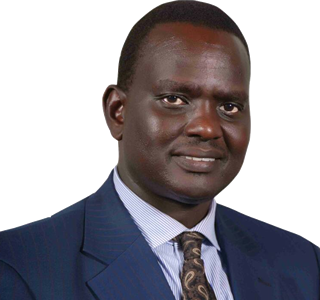
Former cabinet minister and Senator Samuel Pogisho…Photo/Courtesy.
By Micah Sali.
NAIROBI.
Veteran politician Samuel Poghisio recently reignited debate over Kenya’s leadership with his assertion that the country’s next president should come from a smaller community.
Poghisio, a former West Pokot senator, argued that leaders from minority groups lack entitlement and are less likely to misuse power, stating that such leaders “don’t even have the capacity to be corrupt.”
However, Kenya’s leadership history reveals that corruption, nepotism, and abuse of power transcend tribal identity.
From large communities like the Kikuyu to smaller ones like the Tugen and Kalenjin, systemic failures have plagued successive administrations, casting doubt on the argument that a leader’s tribal origin determines governance quality.
Former President Daniel arap Moi, who hailed from the small Tugen community, ruled Kenya for 24 years, during which corruption reached unprecedented levels.
The Goldenberg scandal, where billions of shillings were siphoned through fictitious gold exports, defined his tenure.
Human rights abuses, political repression, and nepotism characterized his presidency, highlighting that a leader’s community size does not guarantee ethical governance.
Jomo Kenyatta, Kenya’s first president and a Kikuyu, is often criticized for establishing a system that favored his community.
His administration entrenched tribalism and nepotism, laying the foundation for a Kikuyu-dominated state that continues to wield significant economic and political power.
Under his son, Uhuru Kenyatta, Kenya lost an estimated KSh 2 billion daily to corruption, including the COVID-19 billionaires scandal, where funds meant for pandemic relief were looted.
Mwai Kibaki, another Kikuyu, offers a contrasting legacy.
He oversaw significant economic growth, reduced urban crime, and reformed education and agriculture.
Kibaki’s administration decentralized resources through devolution, though his presidency was also marred by the Anglo-Leasing scandal, involving billions in fraudulent contracts.
Despite his achievements, he nearly lost the 2007 election amid claims of vote rigging, which sparked post-election violence.
Current President William Ruto, from the minority Kalenjin community, campaigned on a “bottom-up” economic model.
Yet, his administration has faced allegations of massive public fund losses, casting doubt on his commitment to tackling graft.
His tenure has also revived debate on systemic corruption, with critics pointing to Anglo-Leasing-era scandals and ethnic tensions during his time in previous administrations.
The issue of corruption extends beyond political leadership.
Teachers demand illegal tuition fees, doctors steal public hospital drugs to stock private clinics, and police officers extort bribes from motorists.
Even religious leaders, tasked with guiding moral values, have accepted tainted donations and endorsed corrupt politicians.
Analysts argue Kenya’s problem is not the individual at the helm but a systemic failure rooted in a culture of entitlement and impunity.
Communities often view political power as a “turn to eat,” perpetuating cycles of corruption and exclusion.
Political experts emphasize the need for institutional reforms and integrity to combat these challenges.
Strengthening the Ethics and Anti-Corruption Commission, empowering the Auditor-General, and promoting judicial independence are critical.
Devolution, while bringing resources closer to citizens, has decentralized corruption, highlighting the need for stricter oversight at county levels.
Civic education is equally important. Families must instill values of honesty and accountability to foster future leaders with integrity.
Citizens must reject tribal politics and demand competence and vision from their leaders.
Poghisio’s comments have sparked debate, but Kenya’s leadership crisis is more complex than tribal identity.
Without addressing systemic failures and fostering a culture of accountability, the country risks repeating the mistakes of the past.
True transformation will only come when integrity and reforms replace tribal politics as the foundation of governance.
Ends.