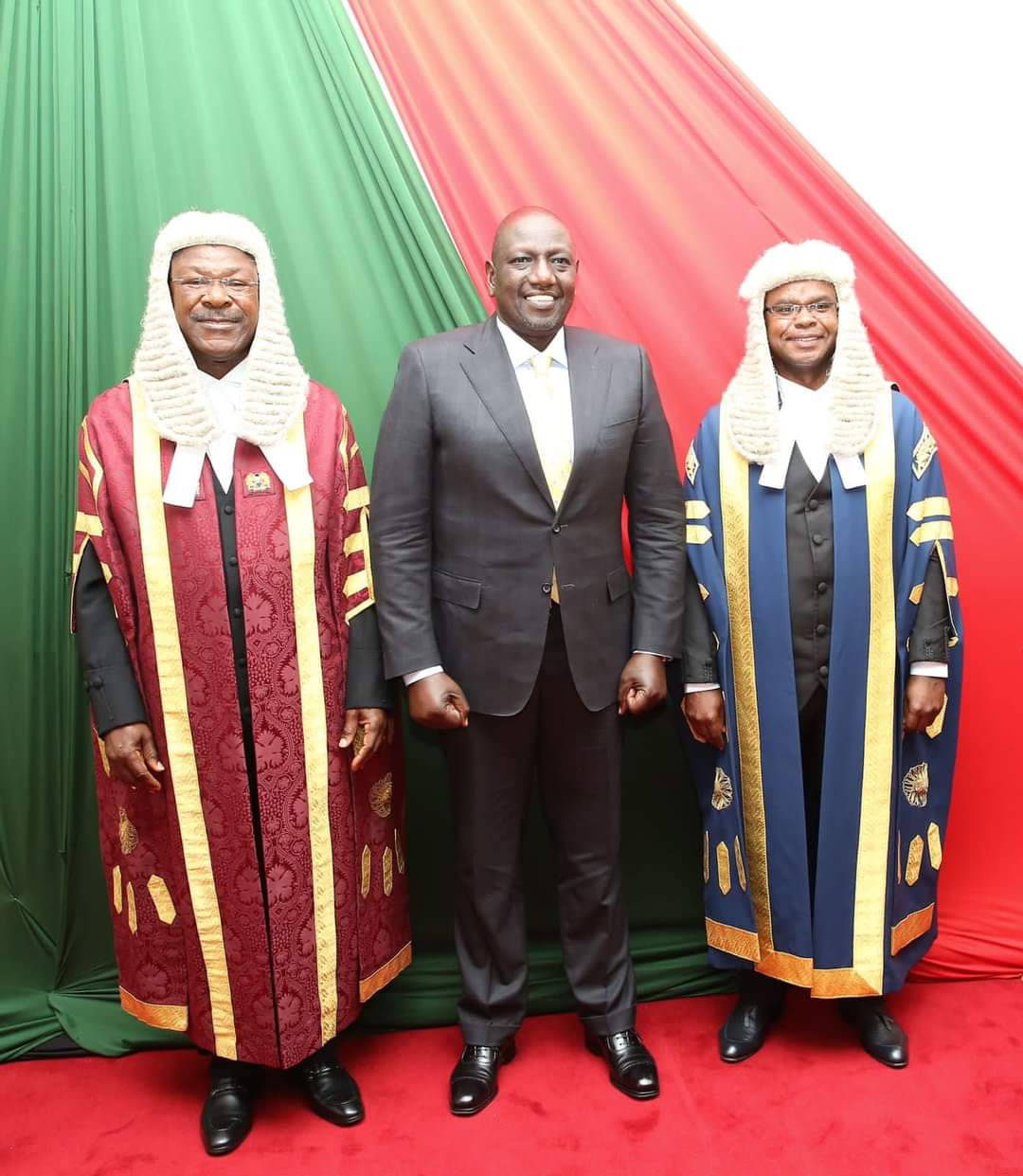
President William Ruto poses for a photo with N.A. Speaker Dr. Moses Wetang’ula (L)and Senate Speaker Amason Kingi(R) before addressing Parliament recently….Photo/Courtesy.
By Mwibanda.
NAIROBI, Kenya.
President William Ruto has defied critics and reasserted his political authority through a series of strategic decisions aimed at addressing public dissatisfaction and solidifying his leadership.
His unexpected rejection of the Finance Bill 2024 and the cancellation of the controversial Adan deal have eased public unrest and positioned him as a leader responsive to citizen concerns.
Gen Z Protests and Finance Bill Rejection.
In June, young Kenyans, primarily Gen Z activists, took to the streets to protest the Finance Bill 2024, which they argued would exacerbate the financial strain on already struggling citizens.
The bill’s proposed taxes sparked nationwide outrage, placing Ruto’s administration on the defensive.
In a surprising move, Ruto rejected the bill, signaling his willingness to heed public sentiment. “I have listened to the voices of Kenyans, especially our youth, and decided against pushing forward with the Finance Bill,” Ruto said in a televised address.
The decision defused protests and shifted the public narrative, allowing Ruto to present himself as a leader committed to democratic engagement.
Canceling the Adan Deal.
The president’s decision to cancel the Adan deal—a project criticized for its opacity and alleged irregularities—further highlighted his adaptability.
The deal had faced public and parliamentary scrutiny over governance concerns.
By distancing himself from the controversy, Ruto avoided political fallout and deflected responsibility to the judiciary and the Office of the Public Prosecutor.
“This government will not support any deal that lacks transparency or accountability,” Ruto said at a press briefing.
The move was lauded by some as a bold stand against mismanagement, while others criticized it as a tactical retreat rather than a genuine reform effort.
Political Calculations and Implications.
Ruto’s actions demonstrate his political acumen and ability to pivot under pressure.
While his decisions have earned praise for their responsiveness, questions remain about their long-term impact on governance and policy.
Political analysts argue that rejecting the Finance Bill and canceling the Adan deal must lead to more inclusive economic policies and enhanced transparency to maintain public trust.
“Ruto has momentarily outmaneuvered his critics, but sustained inaction on systemic issues like corruption could undermine these gains,” said political analyst Herman Manyora.
The Stakes for Ruto’s Presidency.
While these strategic moves have bolstered Ruto’s standing, failure to deliver meaningful reforms could damage his credibility.
Critics warn that relying on political maneuvering without addressing underlying issues risks alienating voters and emboldening opposition parties ahead of the 2027 elections.
Ruto’s presidency now hinges on whether he can transform these tactical victories into substantive change.
His ability to tackle systemic governance challenges and meet public expectations will likely determine his legacy as a reformer—or as a politician skilled at managing crises without solving them.
As Kenya navigates this critical juncture, one thing is clear; underestimating Ruto’s ability to adapt and respond to political challenges could prove a costly mistake for his opponents.
Ends.