


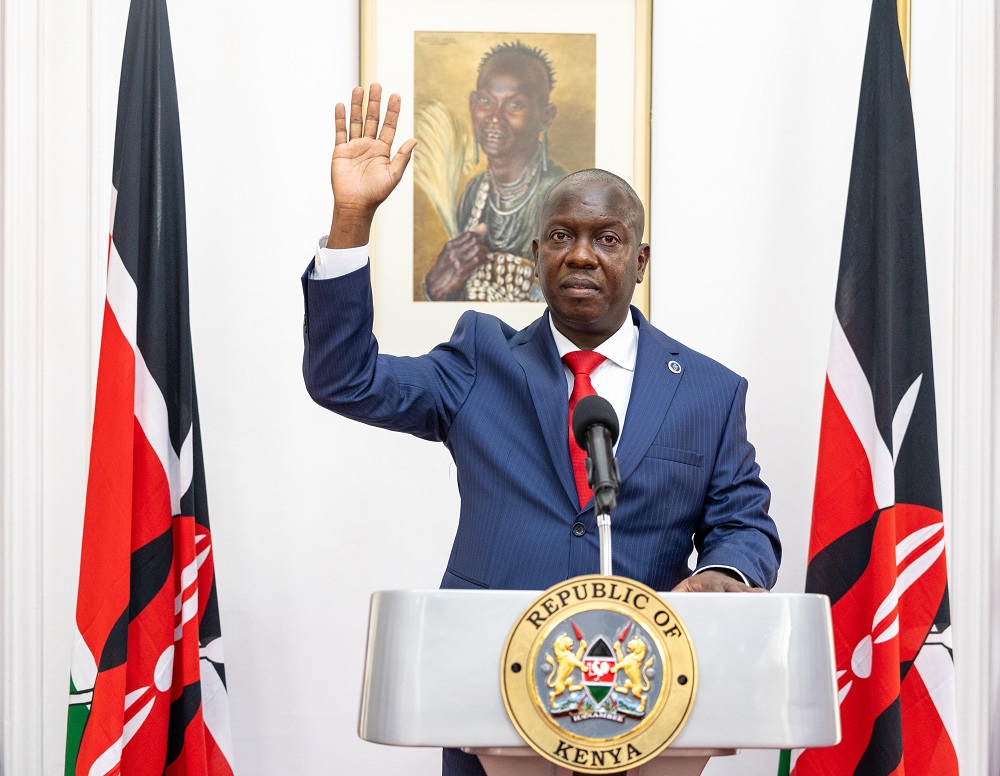
DPP RENSON INGONGA…Photo/Courtesy.
By Mwibanda.
NAIROBI, Kenya.
Kenya’s battle against corruption is facing a critical challenge as tensions between two key agencies, the Ethics and Anti-Corruption Commission (EACC) and the Office of the Director of Public Prosecutions (ODPP), stall efforts to hold perpetrators accountable.
The strained relationship has delayed prosecutions, leaving Kenyans frustrated by a lack of tangible progress in the fight against graft.
The institutional discord has drawn criticism from President William Ruto, who has expressed dissatisfaction with the ODPP’s handling of corruption cases.
Ruto has accused the prosecutorial office of inefficiency, citing delayed prosecutions and the frequent withdrawal of cases as evidence of systemic shortcomings.
These frustrations reflect broader public sentiment over the perceived lack of accountability for those implicated in corruption scandals.
A Strained Partnership.
The conflict between the EACC and ODPP is not new, with each agency blaming the other for failures in the judicial process.
The EACC has long accused the ODPP of being slow to prosecute cases, while the ODPP has often pointed to poorly investigated or incomplete case files as the reason for delays.
President Ruto’s criticism has added pressure on the ODPP to deliver, particularly in high-profile cases involving significant public resources.
Critics argue that the tension between the two agencies has allowed corruption cases to stagnate in the courts, emboldening corrupt individuals and eroding public trust in Kenya’s justice system.
Leadership Changes at the EACC.
Amid this discord, the EACC has nominated Abdi Ahmed Mohamud as its new Chief Executive Officer, replacing Twalib Mbarak.
The nomination has generated interest and hope that Mohamud’s leadership might repair relations with the ODPP and reinvigorate the anti-corruption fight.
As a long-serving insider, Mohamud brings extensive institutional knowledge to the role.
However, his appointment comes at a time of mounting public and political pressure to achieve results.
Observers believe his top priority must be fostering a collaborative relationship with the ODPP to ensure more effective prosecutions.
Presidential Frustration and Public Pressure.
President Ruto’s criticism highlights broader dissatisfaction with Kenya’s anti-corruption framework.
He has emphasized the need for reforms within the ODPP to streamline prosecutions and ensure that justice is delivered efficiently.
The president’s complaints have resonated with many Kenyans, who view the delays and inefficiencies as a betrayal of the government’s commitment to fighting graft.
Parliamentary Deliberation.
The National Assembly will soon deliberate on Mohamud’s nomination, with lawmakers expected to scrutinize his vision for resolving the EACC-ODPP impasse.
Kenyans have urged parliamentarians to put national interests above partisan politics during the vetting process, noting that corruption remains one of the biggest obstacles to Kenya’s development.
Path to Collaboration.
Experts agree that improving inter-agency cooperation is essential to combating corruption effectively. Key recommendations include:
Regular Inter-Agency Meetings: Foster routine discussions to address challenges and ensure alignment on case priorities.
Enhanced Communication: Create clear, efficient channels for sharing information to improve the quality and timeliness of investigations and prosecutions.
Public Accountability: Commit to greater transparency by regularly updating Kenyans on case progress and outcomes.
Conclusion.
With Kenya losing billions annually to corruption, further delays in addressing the issue could have dire consequences for the country’s development.
Parliament, the incoming EACC leadership, and the ODPP must demonstrate a renewed commitment to eradicating graft.
President Ruto’s frustrations underscore the urgent need for reform and action.
As Kenyans watch closely, the country’s anti-corruption institutions face a pivotal moment.
Will this transition in leadership mark a turning point in the fight against corruption, or will institutional inefficiencies and strained relations continue to stifle justice? Only time will tell.
Ends.



