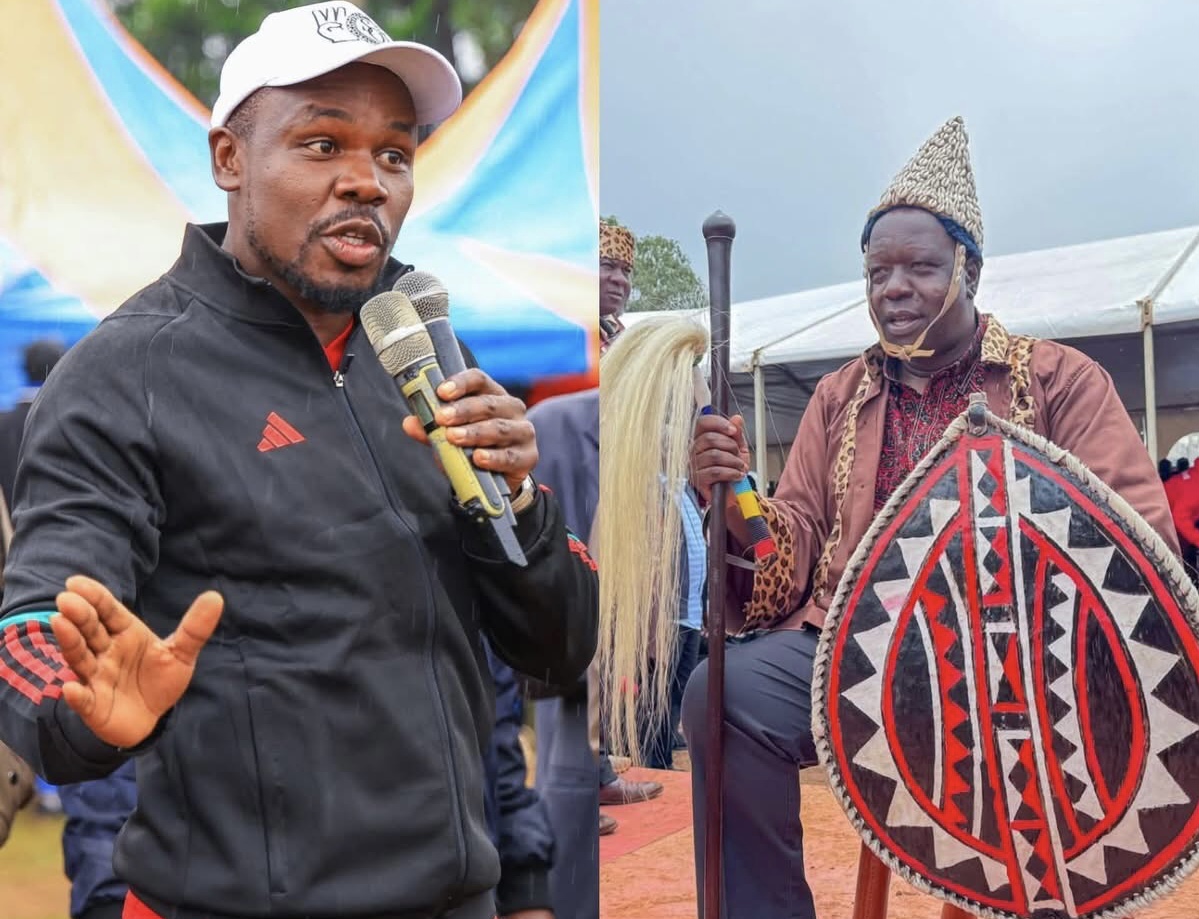
Majority Whip Silvanus Osoro and Jubilee presidential candidate Prof Fred Matiang’i ….Photo/IP
NAIROBI, Kenya (IP)
A renewed debate over regional political leadership has emerged after National Assembly Majority Whip Silvanus Osoro criticized the symbolic installation of former Interior Cabinet Secretary Fred Matiang’i as Omogusii kingpin by leaders allied to the opposition.
Osoro dismissed the move as political theater and maintained that President William Ruto remains the region’s most consequential political figure, rejecting what he described as attempts to create parallel centers of influence in Kisii.
The exchange has reignited discussion about Kenya’s long-standing “kingpin” politics — the recurring framing of regions as requiring a singular political figure to articulate and negotiate their interests at the national level.
Kisii’s Historical Rivalries
Political competition within the Gusii region predates the current controversy.
In the decades following independence, rivalry between Zachary Onyonka and Simeon Nyachae shaped alignments and influence.
Onyonka served as a senior Cabinet minister in the early years of independence, while Nyachae rose from provincial administration to become a powerful Cabinet minister under President Daniel arap Moi.
Their competition reflected broader struggles over access to state power and development resources.
Rift Valley and Early Post-Independence Tensions
In the Rift Valley, ideological and political tensions between Jean-Marie Seroney and Daniel arap Moi in the 1960s and early 1970s underscored divisions during Kenya’s formative years.
In subsequent decades, the region has witnessed shifting political alignments involving President William Ruto, KANU chairman Gideon Moi, former Bomet Governor Isaac Ruto and former Cabinet minister and Cherang’any MP Kipruto Kirwa.
Luo Nyanza and Western Kenya
In Luo Nyanza, political discourse has long been shaped by the ideological rivalry between Kenya’s first vice president, Oginga Odinga, and Cabinet minister Tom Mboya.
Western Kenya has experienced leadership contests dating back to independence-era figures such as Masinde Muliro and Wycliffe Awori.
In contemporary politics, discussions frequently center on National Assembly Speaker Moses Wetang’ula, Prime Cabinet Secretary Musalia Mudavadi, Trans Nzoia Governor George Natembeya and Nairobi Senator Edwin Sifuna.
Eastern, Central and Coastal Regions
In the Eastern region, political influence has often been associated with Wiper leader Kalonzo Musyoka, former Kitui Governor Charity Ngilu and former Machakos Governor Alfred Mutua.
Central Kenya’s political landscape has evolved around figures including former President Uhuru Kenyatta, Deputy President Kithure Kindiki and former Deputy President Rigathi Gachagua.
At the Coast, influential leaders such as former Mombasa Governor Hassan Joho, Senate Speaker Amason Kingi and Cabinet Secretary Salim Mvurya continue to shape regional political discourse.
Institutional Governance vs Personality Politics
Kenya’s 2010 Constitution established devolved governance and formula-based revenue allocation intended to reduce centralized patronage politics.
However, analysts note that regional politics often continues to revolve around personality-driven narratives.
Osoro’s remarks reflect a broader national debate about representation, influence and the role of symbolic leadership as political alignments begin to take shape ahead of the 2027 general election.
Whether Kenya’s regions will continue to frame political influence through “kingpin” narratives or shift toward issue-based competition grounded in institutions remains an open question.