


By Peter Mwibanda /Intellectuals Post
NAIROBI
As Kenya inches toward the 2027 general election, the Orange Democratic Movement (ODM) is confronting a defining moment that could reshape its future — and the country’s opposition politics.
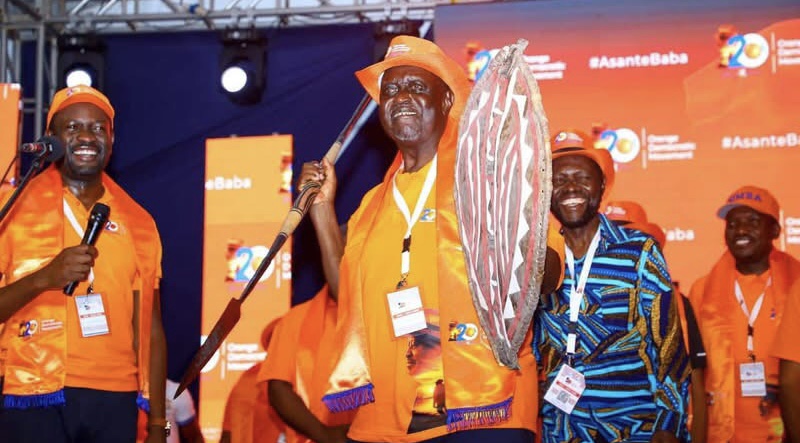
Once held together by a singular political force, the 20-year-old party is now grappling with internal contagion marked by generational warfare, tribal alignments and open feuds among senior officials.
What was once managed dissent has hardened into factional battles, exposing a party struggling to transition from personality-driven politics to institutional coherence.
For two decades, ODM’s national reach was inseparable from Raila Odinga’s political capital.
He was the glue — the mobilizer across regions, the negotiator in moments of crisis, and the symbol around which disparate interests converged.
That dominance delivered electoral resilience but also delayed succession planning.
With Odinga’s political twilight increasingly evident, ODM’s fault lines have burst into the open.
Competing camps are not merely debating ideology or strategy; they are contesting ethnic arithmetic, control of party organs and access to state-facing leverage.
Analysts warn that the party’s internal disputes risk hollowing out its national appeal.
ODM’s historic strength lay in its ability to project a cross-regional identity rooted in reformist rhetoric and mass mobilization.
Today, that identity is under strain as internal actors retreat into ethnic comfort zones, eroding the party’s claim to broad-based representation.
“The danger for ODM is not just division,” said a Nairobi-based political analyst. “It is fragmentation without a unifying narrative. When a party loses its central pillar and fails to institutionalize leadership succession, implosion becomes a real possibility.”
The contagion is also generational. Younger leaders accuse the old guard of gatekeeping and ideological stagnation, while veterans question the discipline and loyalty of their would-be successors.
The standoff has paralyzed decision-making, diluted messaging and weakened grassroots structures at a time when opposition parties should be consolidating.
Critically, ODM’s crisis mirrors a broader malaise in Kenyan party politics, where movements often revolve around individuals rather than enduring institutions.
Parties rise, peak and decline with their founders, leaving voters disillusioned and democracy episodic rather than programmatic.
If ODM fails to manage an orderly transition, some observers argue it could face a natural political death — not through formal dissolution, but by gradual irrelevance.
Without Raila Odinga as the centripetal force, the party risks hemorrhaging members to ethnic kingpins, breakaway factions or opportunistic alliances ahead of 2027.
Yet the moment also presents an opportunity.
A deliberate reset — anchored in internal democracy, ideological clarity and credible leadership renewal — could reposition ODM as a modern opposition force.
That would require difficult compromises, reduced personality cults and a willingness to subordinate ethnic calculations to national vision.
As the 2027 contest looms, the question is no longer whether ODM is changing, but whether it can survive the change.
In Kenya’s unforgiving political terrain, parties that fail to evolve do not merely lose elections — they fade into history.



