


NAIROBI
Kenya’s meteoric gold exports are setting off alarms far beyond its borders. In 2025, the country reportedly shipped a staggering 42.1 tonnes of gold to the United Arab Emirates (UAE), more than triple the 13.8 tonnes recorded in 2024.
Yet the spike paints a puzzling — and troubling — picture. Officially, Kenya produces just over one tonne of gold annually, mostly from two licensed medium-scale mines.
The gap between recorded domestic output and surging export volumes has reignited fears that Kenya is fast becoming a major transit hub for smuggled gold — not a beneficiary of a legitimate mining boom.
A Hub, Not a Source
According to a June 2025 report by SwissAid, Kenya has steadily morphed into a central corridor for gold from conflict-ridden neighbours — notably South Sudan, Sudan and Democratic Republic of Congo (DRC), with possible flows from Ethiopia.
Though Kenya’s 2023 declared exports were a modest 672 kilograms, SwissAid estimates the actual outflows — largely undeclared — may exceed two tonnes annually.
The mismatch becomes even more dramatic in light of 2025’s 42-tonne export figure.
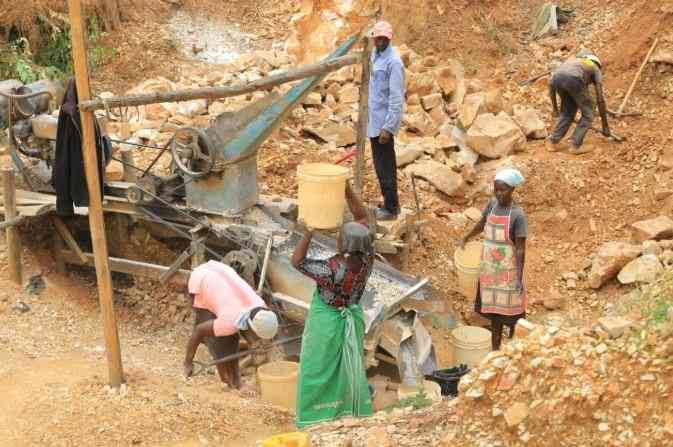
The informal artisanal and small-scale mining (ASM) sector — loosely monitored and poorly documented — is reportedly used as a cover to funnel foreign gold into Kenya before it is re-exported under Kenyan documentation.
History Echoes: The Goldenberg Parallel
Kenya’s entanglement with illicit gold trade is hardly new. During the 1990s, the infamous Goldenberg scandal exploited opaque gold-export subsidies, siphoning foreign currency through inflated and dubious declarations — costing the nation an estimated 10 per cent of its GDP at the time.
Today’s spike in gold exports — under suspiciously thin domestic production — evokes uncomfortable parallels. Once again, gold is flowing through Kenya, but with little transparency, scant public benefit, and much speculation about hidden profiteers.
Who Benefits — and Who Loses?
On paper, surging gold exports should buoy Kenya’s economy: forex earnings rise, mining revenues accumulate, jobs are created. But the reality is starkly different.
Limited Legitimate Gains: Two licensed medium-scale mines send their production to refiners abroad, meaning Kenya collects minimal value, while most of the “boom” is built on unlogged ASM output and smuggled gold.
Leakage of Regional Wealth: Gold of origin from South Sudan, DRC, Sudan (countries ravaged by conflict) is drained through Kenya — deepening resource-drain from already vulnerable states, while enriching opaque networks of traffickers, intermediaries, and foreign refineries.
Elite Enrichment: Given the shadowy routes, dubious declarations and alleged complicity, the bulk of profits likely accrue to a small elite group — not local communities or the broader Kenyan public.
Reports have even referenced high-level accusations involving government insiders and regional war economies.
In effect: the “gold boom” appears largely as a shell game — wealth extracted from strife-torn regions, passed clandestinely through Kenya, and monetised elsewhere.
Diplomatic Tightrope & Regional Fallout
Despite repeated accusations, Kenya maintains diplomatic relations, leveraging its position as a legitimate trade hub.
The government — facing pressure — has signalled willingness to act.
Plans are reportedly underway to establish a specialized mining police unit and to support regional certification of gems and minerals.
The stakes go beyond economics.
The illicit gold flows intersect with regional conflicts: for instance, gold from war-torn Sudan — much of it controlled by paramilitary groups — is said to pass through Kenya en route to UAE refineries, where its origins are laundered.
By allowing such trade to persist, Kenya risks not only its credibility as a legitimate trade conduit, but also complicity in facilitating resource-fuelled violence.
Conclusion: A Golden Mirage
Kenya’s staggering 42-tonne gold export headline in 2025 may glitter — but the shine hides a darker truth.
Far from being a success story of booming mining, it looks like a well-oiled pipeline for illicit regional gold, generating profits for a few while undermining regional stability and starving local communities of value.
Unless Kenya moves swiftly to close loopholes, enforce transparency and ensure gains benefit all Kenyans, this “gold bonanza” risks becoming an international scandal with long-term human and reputational costs.


Saw this piece and it hits a sensitive nerve for me as someone in the beauty biz—transparency and value capture matter everywhere, not just mining. The gold hype is shiny, but the real win goes to those who can track supply, ensure quality, and build trust. In Suplery we push for verified product data and real-time stock control to keep brands honest and efficient. If you’re in a barbershop or spa, streamlined inventory and a built-in shop help you avoid gaps and unnecessary back-and-forth. Suplery offers real-time stocktakes and a single dashboard for suppliers, plus wholesale pricing—a must-use solution for keeping your service menu flawless. Want to learn more? Let’s connect.”} } } } } } } } } } } } } } } } } } } } } } } } } } } } } } } } } } } } } } } } } } } } } } } } } } } } } } } } } } } } } } } } } } } } } } } } } } } } } } } } } } } } } } } } } } } } } } } } } } } } } } } } } } } } } } } } } } } } } } } } } } } } } } } } } } } } } } } } } } } } } } } } } } } } } } } } } } } } } } } } } } } } } } } } } } } } } } } } } } } } } } } } } } } } } } } } } } } } } } } } } } } } } } } } } } } } } } } } } } } } } } } } } } } } } } } } } } } } } } } } } } } } } } } } } } } } } } } } } } } } } } } } } } } } } } } }}}} } } } }}}} } 0? Please disregard trailing repetitions. Sorry for the glitch above. The core answer is the JSON at the start of the message.