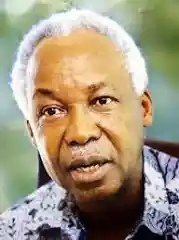
Tanzanite first President the late Mwalimu Julius Nyerere
By Peter Marango Mwibanda
DAR ES SALAAM
Tanzania, once hailed as an island of stability in East Africa, is facing a new political awakening that threatens to unravel decades of delicate unity built under the ruling Chama Cha Mapinduzi (CCM).
The growing unrest led by Gen Z activists has exposed deep fissures between the mainland (Tanganyika) and Zanzibar, reigniting old questions about identity, equality and representation that the late Mwalimu Julius Nyerere sought to settle through union and nationhood.
At the heart of the crisis stands President Samia Suluhu Hassan — a Zanzibari leading a country still wrestling with the dual identity of being both Tanzania and Tanganyika.
Ironically, while Dr. Hussein Ali Mwinyi serves as President of Zanzibar, Suluhu’s leadership from the mainland has stirred quiet discontent among sections of Tanganyikans who feel politically sidelined.
The perception of “two Zanzibaris at the top” has reignited mainland-versus-island tensions that CCM has long suppressed through its unity rhetoric.
The Gen Z Awakening
What began as murmurs of discontent has evolved into a youth-led revolution that draws its inspiration from the founding ideals of freedom, justice and accountability.
Tanzania’s Gen Z, much like their peers across Africa, are rejecting political conformity and fear.
In their protests, slogans, and social media mobilization, they invoke the spirit of Nyerere — not as a nostalgic icon but as a reminder of unfulfilled promises.
The youth argue that the CCM of today no longer represents the socialism, equality and moral leadership Nyerere envisioned.
Instead, they see a system captured by elites, detached from the people and intolerant of dissent.
President Suluhu’s administration, despite her calm persona and international diplomacy, has found itself cornered between maintaining order and answering growing calls for constitutional reform and political openness.
CCM’s Identity Crisis
The party of Nyerere, once revered for its discipline and ideological clarity, is now in an existential struggle.
CCM’s long rule has created a political culture of complacency — where reform is feared and loyalty to the party outweighs loyalty to principle.
The Gen Z uprising exposes this fatigue and the reality that younger generations no longer feel bound by CCM’s historical legitimacy.
Many Tanzanians now question whether CCM can evolve without collapsing under the weight of its contradictions.
Can it still claim to represent both Tanganyika and Zanzibar equally? Can it still speak for the youth when those youth are leading the protests demanding its reform or removal?
The Road Ahead
Tanzania stands at a crossroads. The ongoing demonstrations are not merely about economic hardship or governance — they are a referendum on the Union itself, on CCM’s moral authority and on whether the dream of unity that Nyerere built can survive a generational shift.
The youth revolution has opened a national conversation long suppressed by fear. It is a moment of reckoning: for Suluhu, to either lead a genuine democratic transition or risk being remembered as the leader who presided over the unraveling of the Union; for CCM, to return to its ideological roots or face political extinction; and for the Tanzanian people, to redefine what unity and freedom mean in a modern, digital, and awakened society.
As one Gen Z protester in Dodoma wrote on a placard: “We are not rebelling against Nyerere — we are demanding what he promised.”
That single statement may define Tanzania’s future more than any policy speech or political slogan.
Peter Marango Mwibanda
The Intellectuals Post, Red and Black Publishing