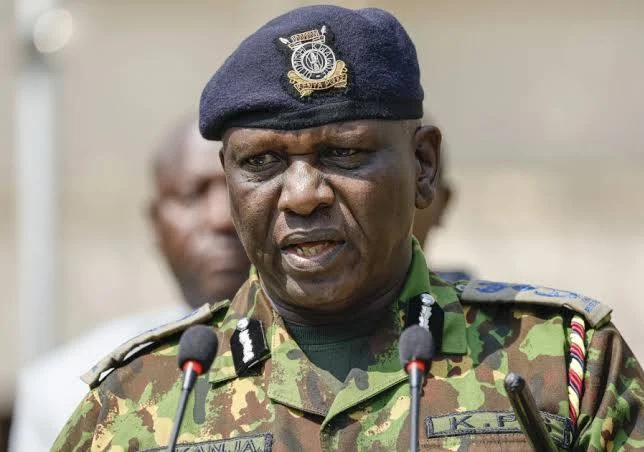
Inspector of Police Douglas Kanja…Photo/courtesy.
By Peter Mwibanda | Nairobi.
NAIROBI, Kenya (IP) — Kenya’s Judiciary on Wednesday issued a decisive order barring Inspector General of Police Japheth Koome Kanja from blocking access to Nairobi’s Central Business District during protests, in what observers call a critical test of constitutionalism under President William Ruto’s government.
The High Court ruling comes amid growing alarm over alleged police impunity, disregard for court directives, and violent crackdowns on demonstrations led by Gen Z activists.
Rights groups say the decision is more than procedural—it’s a warning shot to security agencies accused of dismantling hard-won civil liberties.
“The Constitution is not a suggestion,” said constitutional lawyer Muthomi Karanja.
“When the police disregard court orders, they don’t just break the law—they break public trust.”
Despite existing legal provisions requiring officers to identify themselves during crowd control operations, enforcement remains scant.
Civil society groups accuse the National Police Service of operating with near-total impunity—especially in the wake of deadly confrontations with protesters.
President Ruto’s recent remarks urging officers to “shoot protesters in the legs” to quell unrest have drawn fierce criticism at home and abroad.
The Kenya National Commission on Human Rights reports at least 39 deaths linked to the protests, many involving live bullets fired by police.
Among the victims: students, teenagers, and commuters allegedly caught in indiscriminate gunfire.
Witnesses describe daytime shootings and what appear to be extrajudicial killings, deepening the sense of crisis.
The court’s order followed petitions challenging police roadblocks, detentions, and the lockdown of Nairobi’s city center—moves widely viewed as infringements on the rights to peaceful assembly, association, and movement.
“This is not just a fight for roads—it’s a fight for the soul of our republic,” said activist Sharleen Odinga, whose organization was among the petitioners.
“If the police can defy courts today, what stops them from defying elections tomorrow?”
Inspector General Kanja has yet to respond publicly. His past record, however, shows a pattern of resistance to judicial oversight.
In multiple instances, court orders related to protest rights and police accountability have gone unheeded.
Legal experts say such defiance erodes democratic foundations.
“The erosion of the rule of law is the first sign of constitutional decay,” said Dr. Olivia Munene, a governance expert at the University of Nairobi. “When security agencies act above the law, it opens the door to tyranny.”
President Ruto, who campaigned on promises of legal reforms and economic equity, now faces criticism for appearing to condone force over dialogue.
His silence on this ruling—and the broader crackdown—has only sharpened the backlash.
As protests surge and young Kenyans demand transparency, the Judiciary’s stance is being watched closely.
Analysts warn that how the Executive and police respond to Wednesday’s ruling could define the trajectory of Kenya’s democracy.
For now, the Judiciary has spoken. Whether the police listen remains to be seen.
Peter Mwibanda is a Kenyan political and legal affairs blogger based in Nairobi.
Ends.