


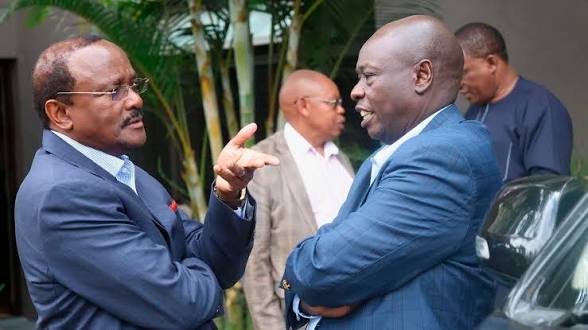
Wiper leader Kalonzo Musyoka and DCP leader Rigathi Gachagua dismissed the fuel price reduction as a mockery to Kenyans…..Photo/IP
By James Wekesi
VIHIGA, Kenya
Boda Boda Rider Lament Highlights Local Strain in New Sh4.82 Trillion Budget
“When the budget ignores our local hustles and makes fuel expensive, it feels like the government is punishing us,” said Evans Barasa, a boda boda motorcycle operator working the Kakamega-Chavakali route.
Barasa’s exhaustion captures the widespread frustration cutting across Western Kenya following the National Treasury’s unveiling of a massive Sh4.82 trillion fiscal blueprint.
While government officials in Nairobi praise the plan as a disciplined roadmap toward macroeconomic stability, everyday workers and political heavyweights warn that Kenyans are being suffocated by structural fatigue.
The latest June 14, 2026, monthly review by the Energy and Petroleum Regulatory Authority (EPRA) has only intensified this anger.
EPRA announced a marginal Sh10.00 drop for diesel to Ksh222.86 per litre, a minuscule 22-cent reduction for Super Petrol to Ksh214.03, and no change for kerosene at Ksh191.38.
Speaking during Holy Mass at St. Mary’s Kibabii Catholic Church in Bungoma County, Wiper Democratic Movement leader Kalonzo Musyoka dismissed the regulatory tokenism as a cruel illusion.
“They have reduced the price of fuel by Sh10, but as the United Alternative Government, we proposed it be reduced to Sh170. This reduction means we will still experience a high cost of living,” Musyoka declared, noting that consumer goods will remain entirely out of reach.
This sentiment was amplified by opposition figures who labeled the minor petrol price cuts as a “heist” against citizens already battered by historic fuel hikes earlier in the year.
Critics, including Democratic Congress Party (DCP) leader Rigathi Gachagua, have heavily targeted the government’s controversial government-to-government (G-to-G) oil import framework.
Gachagua previously charged that the state is allowing internal corporate partners to extract massive margins at the expense of ordinary Kenyans.
“Kenyans deserve clear facts, independent verification, and accountability on how fuel prices are determined,” Gachagua stated, pushing for deep investigations into state-level oil procurement monopolies.
The ambitious national budget aims to collect an unprecedented Sh3.62 trillion in total taxes to bridge a deep Sh1.11 trillion fiscal deficit.
However, in local markets from Luanda to Bungoma, this aggressive revenue extraction strategy translates directly into expensive household goods and empty wallets.
The economic squeeze is hitting the region’s agricultural spine particularly hard.
Smallholder farmers face a punishing combination of erratic weather patterns, high transport overheads and expensive fertilizers.
“If we cannot afford to plant, the whole country will soon be hungry,” warned Wycliffe Wafula, a sugarcane and maize farmer from Mumias.
Without affordable credit or immediate input subsidies, local food production continues to drop, triggering a dangerous spike in food inflation across local trading centers.
Compounding the crisis is a severe local credit crunch.
To bridge its deficit, the state plans to secure Sh1.03 trillion through net domestic borrowing.
Local commercial banks are actively channeling their liquidity into secure, high-yielding government Treasury bills rather than lending to local entrepreneurs.
This dynamic starves rural small-scale enterprises and emerging youth startups of the capital required to grow, leaving millions of unemployed youth trapped in a volatile informal economy.
As the parliamentary debate moves forward, the gap between official optimism and street reality continues to widen.
For the common voter in Western Kenya, the ultimate success of the Sh4.82 trillion budget will not be measured by sterile economic growth percentages, but by whether it leaves enough money in their pockets to feed their families.
Ends.



