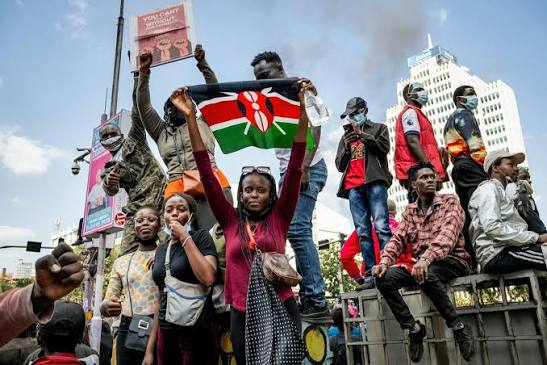
GEN Z’S PIVOTAL ROLE IN SHAPING A UNIFIED FUTURE IN KENYA AND EAST AFRICA
By Peter Marango Mwibanda | Intellectuals Post
NAIROBI, Kenya (IP)
A generational shift is quietly but decisively redefining the political, economic, and social trajectory of Kenya and the broader East African region.
Generation Z—young people born roughly between the late 1990s and early 2010s—are no longer passive observers of governance and development.
They are emerging as architects of a more unified, inclusive, and accountable future.
In Kenya, where more than 70 percent of the population is under the age of 35, Gen Z represents not just a demographic advantage but a transformative force.
Digitally native, socially conscious, and increasingly politically aware, this generation is leveraging technology, civic engagement and cultural influence to challenge entrenched systems and redefine leadership.
A DIGITAL GENERATION DRIVING ACCOUNTABILITY
Unlike previous generations, Gen Z has grown up in the age of smartphones, social media, and instant information. Platforms such as X, TikTok, and Instagram have become tools of mobilization, advocacy, and political expression.
In recent years, Kenyan youth have used these platforms to call out corruption, demand transparency and organize protests—often outside traditional political party structures.
This digital fluency has created a new form of decentralized activism.
Hashtag movements and online campaigns have transcended ethnic and regional divides, fostering a sense of shared identity among young East Africans.
In a region historically shaped by tribal politics, this shift signals a move toward issue-based engagement.
BREAKING THE CHAINS OF ETHNIC POLITICS
For decades, Kenya’s political landscape has been dominated by ethnic alignments and patronage networks.
However, Gen Z is increasingly rejecting this paradigm. Many young voters are prioritizing competence, integrity, and policy over ethnic loyalty.
This trend is not confined to Kenya. Across East Africa—in Uganda, Tanzania, and Rwanda—young people are questioning traditional power structures and advocating for inclusive governance.
Cross-border collaborations among youth-led organizations are promoting regional integration, peacebuilding, and economic cooperation.
By refusing to be boxed into ethnic silos, Gen Z is laying the groundwork for a more unified national and regional identity.
ECONOMIC INNOVATION AND ENTREPRENEURSHIP
Facing high unemployment rates and limited formal job opportunities, Gen Z is turning to entrepreneurship and innovation.
From fintech startups in Nairobi to agritech solutions in rural Kenya, young people are creating jobs and driving economic growth.
The rise of the gig economy and digital marketplaces has enabled youth to bypass traditional barriers to entry.
Mobile money platforms and e-commerce have opened new avenues for trade, connecting local businesses to regional and global markets.
In East Africa, where regional integration remains a key policy goal, Gen Z entrepreneurs are uniquely positioned to bridge economic gaps and foster cross-border trade.
A VOICE FOR SOCIAL JUSTICE AND CLIMATE ACTION
Gen Z’s activism extends beyond politics and economics. The generation is at the forefront of movements addressing social justice, gender equality, and climate change.
In Kenya, youth-led organizations are advocating for environmental conservation, pushing back against deforestation, pollution, and unsustainable development.
Across East Africa, young climate activists are demanding policy reforms and holding governments accountable to international commitments.
This intersectional approach—linking governance, environment, and social equity—reflects a holistic vision for the future.
CHALLENGES AND THE ROAD AHEAD
Despite its potential, Gen Z faces significant challenges. Political repression, limited access to capital, and systemic barriers continue to hinder youth participation.
In some cases, governments have responded to youth activism with hostility, raising concerns about freedom of expression and civic space.
Moreover, the digital divide remains a critical issue. While urban youth are highly connected, many in rural areas lack access to the internet and digital tools, risking exclusion from this transformative movement.
To fully harness the power of Gen Z, policymakers must invest in education, digital infrastructure, and inclusive economic policies.
Equally important is the need to create platforms for meaningful youth participation in governance.
A GENERATION OF POSSIBILITY
The story of Gen Z in Kenya and East Africa is one of resilience, innovation, and hope. This generation is not waiting for change—it is driving it.
As the region stands at a crossroads, the choices made today will determine its future trajectory.
By embracing unity over division, innovation over stagnation, and accountability over complacency, Gen Z is charting a new path.
The question is no longer whether young people will shape the future of Kenya and East Africa.
It is whether leaders will recognize and support their role in building a more unified, prosperous, and just society.