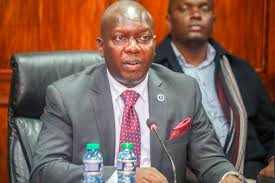
DPP Renson Igonga
By Peter mwibanda
Published: August 2025
In the fight against corruption, Kenya has never lacked suspects nor has it lacked investigations but it increasingly lacks prosecution or more precisely the will to prosecute.
At the center of this faltering war on graft stands one institution: the Office of the Director of Public Prosecutions (ODPP), now under Renson Ingonga.
Once the final push in the wheels of justice, the ODPP is fast becoming the brake pad and a suspicious one at that.
The Great Retreat: Why Are Corruption Cases Being Withdrawn?
In recent months, Kenyans have watched — mouths agape — as the ODPP quietly dropped or diluted dozens of high-profile corruption cases. Take for instance:
Najib Balala’s KSh 8.5 billion case, withdrawn in May 2024 under claims of insufficient evidence despite the Ethics and Anti-Corruption Commission (EACC) stating otherwise.
The Kinanie Leather Industrial Park scandal involving inflated tenders in the Kitui Water Project dropped even after whistleblowers came forward.
Efforts to clear former governors and key parastatal executives like Moses Lenolkulal and Kenya Pipeline officials struck down despite massive paper trails and forensic audits.
These aren’t isolated cases but they form part of a worrying pattern since Renson Ingonga assumed office in 2023.
The ODPP has withdrawn over 1,000 cases many of them tied to graft, procurement fraud and abuse of office.
Each withdrawal comes wrapped in legal jargon: “weak evidence,” “flawed investigations,” or “litigation risk.” but peel back the language and a troubling reality emerges that justice is being undone from within.
ODPP vs EACC: A House Divided Cannot Prosecute
One of the most damning developments is the institutional cold war between the ODPP and the EACC.
The anti-corruption body has gone public with its frustration calling out the ODPP for undermining graft investigations and failing to act decisively on completed case files.
In one particularly scathing rebuke, EACC Chair David Oginde lamented that “the war on corruption is being lost not in the streets or courtrooms but in the offices where decisions to prosecute are made or not made.”
These aren’t vague criticisms; they are warnings of sabotage.
In response ODPP spokesperson Aloys Kemo insists that cases are being withdrawn to avoid wasting taxpayer money or risking compensation to wrongfully accused suspects.
When multimillion-shilling cases vanish overnight with little transparency, the question arises: who benefits?
The Political Elephant in the Courtroom
Let’s not be naïve. In Kenya, the judiciary and prosecutorial arms are rarely insulated from politics.
It is therefore fair necessary, even to ask; was Renson Ingonga appointed for his integrity and experience or for his usefulness to certain political actors?
His predecessors including Noordin Haji, were no saints either.
However Ingonga’s tenure is distinguished by its reluctance.
His ODPP has not only withdrawn corruption cases but has also shown curious silence in prosecuting state-linked violence during political protests, and delays in prosecuting egregious economic crimes.
Whispers in legal circles suggest that Ingonga may be under pressure from political handlers some of whom stand to benefit directly from stalled prosecutions.
If true, this would confirm the worst fears of civil society that Kenya’s justice system has been captured not by incompetence but by design.
Judges Are Losing Patience
It’s not just activists and journalists raising alarm. Members of the judiciary have also weighed in.
In a recent public forum, Justice Prof. Nixon Sifuna decried the rising trend of “suffocating prosecutions” through ODPP withdrawals calling it a betrayal of public trust.
Sifuna went further advocating for the establishment of pre-trial judicial reviews, prosecutorial oversight boards and even integrity audits of the DPP’s office.
The judiciary, it seems, is watching. But whether it will act is another matter.
Credit Where It’s Due but Not Much Is Due
To be fair, Renson Ingonga has made some reformist noises. He’s advocated for:
Decentralization of prosecutions to county levels.
Expansion of plea bargaining frameworks to ease court backlog.
Stronger cooperation with the Law Society of Kenya and the Judiciary.
What good are such reforms when the biggest fish continue to swim free?
Why should justice be reserved for petty offenders and white-collar criminals as they sip champagne in political offices?
This Isn’t About Legal Technicalities — It’s About Moral Collapse
Let’s be clear: corruption prosecutions are hard. Investigations are messy. Evidence gets buried.
Witnesses disappear but what we’re witnessing isn’t complexity ; it’s cowardice and possibly collusion.
Every time a graft case is dropped, it emboldens the next thief.
Every time the ODPP shrugs its shoulders, a new billionaire is minted on stolen taxes and every time the system fails the poor pay.
If the ODPP cannot — or will not — rise to the moment, then Kenya must rise against it.
Not violently, but vocally because the future of justice in this country should not hinge on the decisions of one man when so much is at stake.
So, was Renson Ingonga the Right Choice?
At this point, the evidence speaks for itself.
Whether by lack of resolve, pressure from above, or political debt, Ingonga’s ODPP is failing.
In doing so, it is weakening every other arm of the criminal justice system.
It is time we asked: should prosecutorial power be so centralized? Should the DPP have unchecked discretion? Should the ODPP remain a black box?
Or should it finally be held to account — just like those it is supposed to prosecute?
Reclaiming the Justice Agenda
Kenya’s war on corruption doesn’t need more slogans but needs spine.
Institutions like the ODPP must be reclaimed by the public, scrutinized relentlessly, and reformed fundamentally.
Until then, the wheels of justice will continue to turn in reverse — lubricated not by law, but by impunity.
Hate it? Prove it wrong. But don’t ignore it. Because when justice dies in silence, we all become accomplices.