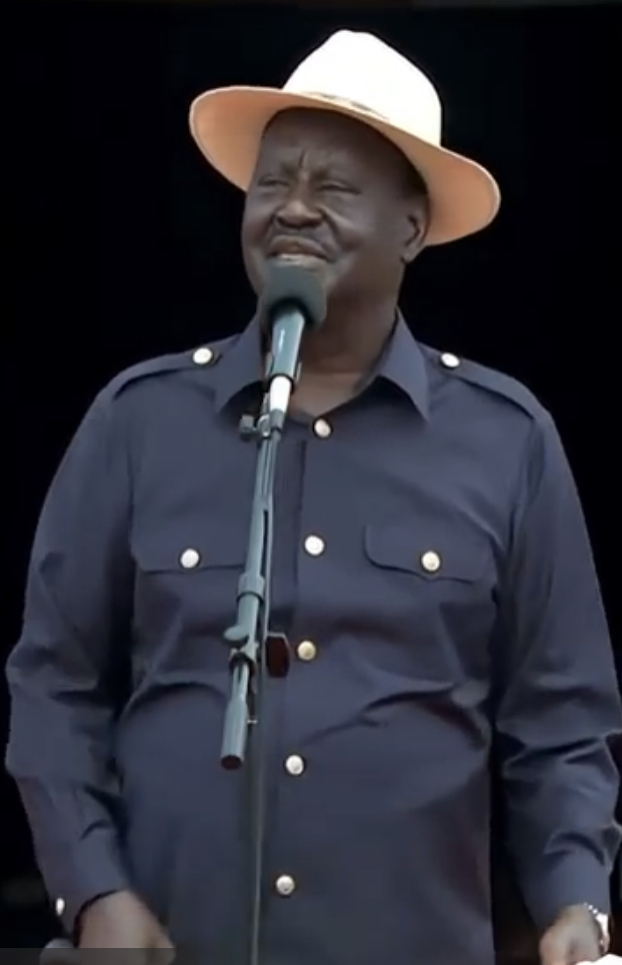
Veteran opposition leader Raila Odinga.
By IP reporter.
NAIROBI, Aug. 11, 2025 — Across Africa, opposition leaders find themselves walking a perilous tightrope between personal survival and the pursuit of democratic change.
While some remain steadfast—undaunted by repression, exile or coercion—others have gradually migrated toward the very systems they once opposed, blurring lines between dissent and conformity.
Opposition’s Two Faces.
On one side are individuals like Uganda’s Bobi Wine and Zimbabwe’s Nelson Chamisa, whose identities are forged through resistance rather than convenience.
These veteran dissenters have endured prison cells, exile and intimidation while resisting co-option and corruption.
On the opposite side, some emerging opposition figures have opted for pragmatism—believing that working from within offers a path to reform—but in practice this often undermines broader democratic aims.
Citizens Caught in the Crossfire
The struggle extends far beyond leaders. Ordinary citizens–journalists, activists, workers—bear the brunt of state suppression.
Governments across the continent frequently criminalize protests, monitor online speech and detain activists.
Yet civic resilience endures. From Sudan’s pro-democracy sit-ins to Senegal’s street protests and Nigeria’s #EndSARS movement, the call for accountability persists.
Trust remains fragileWhen opposition leaders are perceived to falter—either through compromise or co-option—public willingness to resist diminishes, feeding a cycle of fear, apathy and authoritarian resilience.
Gen Z Speaks a New Language.
Africa’s Gen Z is redefining political engagement. They organize across encrypted platforms, operate without traditional hierarchies and prioritize transparency—not only from governments, but also from opposition leaders.
Their activism transcends national borders: Nigeria’s youth amplify Sudan’s struggle while Ugandan protests echo across South African Twitter feeds.
Romanticized histories of resistance no longer carry weight. For these digital natives, only results will do—and for the established guard, that brings both risk and opportunity.
The Road Ahead.
Democracy across Africa is at a crossroads. Many power structures remain anchored in liberation-era networks—sustained by patronage, security forces and legal manipulation.
To break their hold, a multi-pronged strategy is essential:
Opposition leaders must resist co-option and prioritize institutional reform over short-term gains.
Civic movements must remain decentralized to avoid decapitation when leaders are targeted.
Gen Z must gain meaningful influence in mainstream politics without being co-opted.
International allies should support grassroots initiatives—not just elite politicians.
Democracy in Africa will not be granted from above—it must be demanded from below, by leaders in chambers and millions in streets, online spaces and underground networks.
They refuse to surrender their right to choose their future.
Ends.