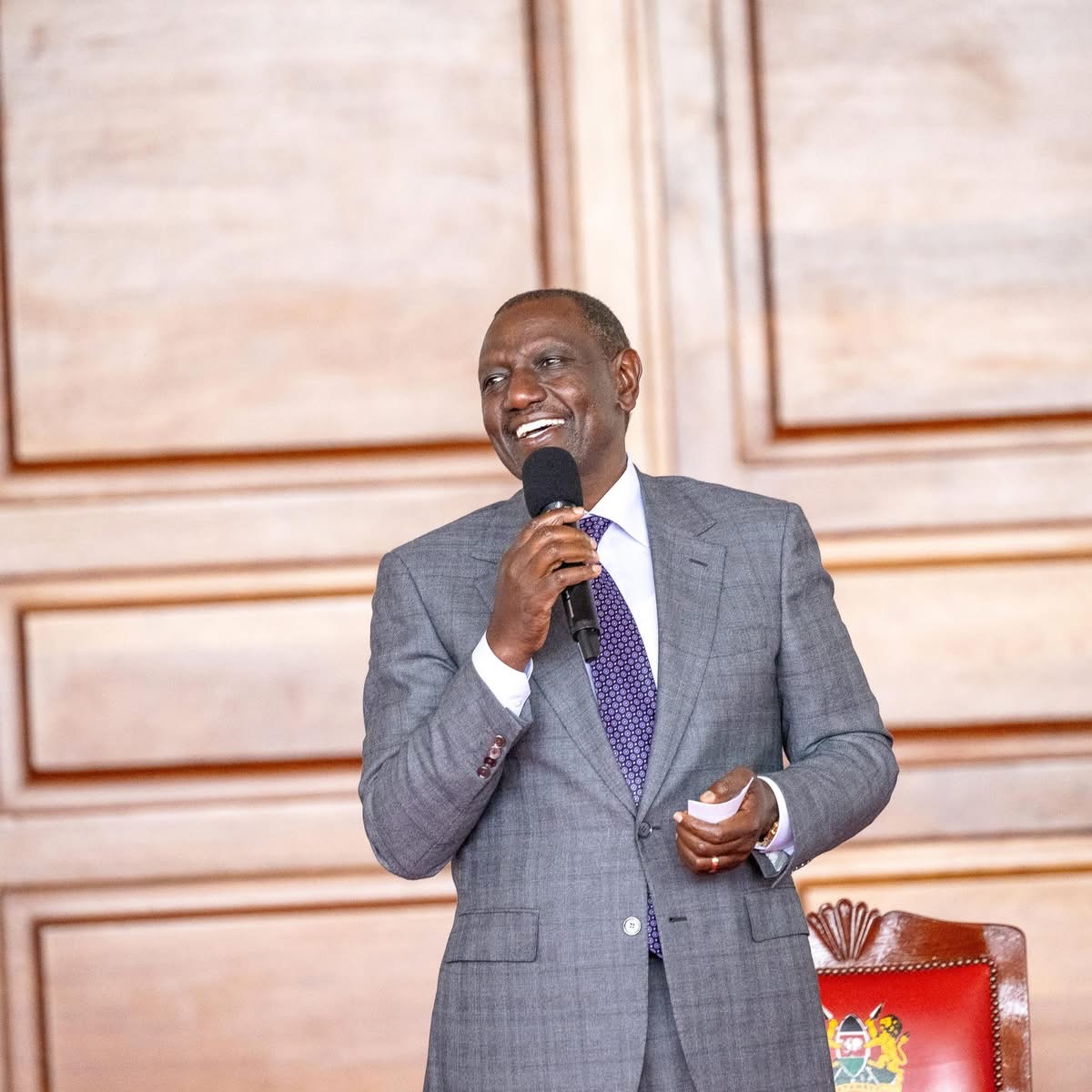
President William Ruto.
By Peter Marango Mwibanda.
NAIROBI, Kenya (IP) — With just five years remaining before the deadline, Kenya is experiencing a resurgence of hope that it can still meet the ambitious targets laid out in Vision 2030 — a national development plan unveiled in 2008 to transform the country into a middle-income, industrialized nation.
Despite years of political instability, corruption, global shocks, and the aftermath of the COVID-19 pandemic, progress is being made.
Infrastructure gains, educational reforms, and a digital transformation push have renewed confidence among policymakers, citizens, and development partners that the vision is still within reach.
Momentum Across Pillars.
Built on economic, social, and political foundations, Vision 2030 is beginning to show signs of impact.
Mega projects such as the Standard Gauge Railway, Lamu Port, Nairobi Expressway, and the expansion of national fiber optic networks have improved connectivity and laid the groundwork for industrialization.
Meanwhile, industrial parks, Special Economic Zones (SEZs), and the Konza Technopolis are drawing new private sector interest after years of stagnation.
The country’s growing digital economy and fintech ecosystem, bolstered by its youthful population, are key pillars of future growth.
Socially, government programs like the competency-based curriculum (CBC), investment in Technical and Vocational Education and Training (TVET), Universal Health Coverage (UHC), and affordable housing projects are starting to show tangible results, especially in urban centers.
A Restive but Engaged Citizenry.
On the political front, analysts point to growing civic engagement and activism as a sign of maturing democracy. Recent youth-led protests and civil society mobilizations have pressured the government to improve accountability and transparency.
“Democracy isn’t just about elections,” said a governance analyst in Nairobi. “It’s about a people who are no longer passive — they demand results.”
Obstacles Persist.
Still, significant challenges remain. Corruption continues to drain public resources, while regional disparities and a rising cost of living strain social cohesion. Kenya’s ballooning public debt has limited fiscal space for new development spending.
Yet, the government’s pivot to public-private partnerships, green energy investment, and export diversification is being viewed as a pragmatic shift that could offset these constraints and attract foreign investment.
Vision Becomes Collective.
Perhaps most encouraging is the growing public ownership of Vision 2030. County governments, universities, startups, and civil society groups are increasingly aligning their activities with the national development agenda.
“Vision 2030 is no longer just a government slogan,” said a youth leader in Kisumu. “It’s something communities are trying to localize and make real.”
Urgency Over Rhetoric
As the clock winds down, experts warn that the final stretch must focus on delivery — not declarations.
“Execution is everything now,” said a policy advisor at the Ministry of Planning. “We need results, not photo-ops. Data must drive decisions. And citizens must be part of the monitoring process.”
With determination, innovation, and inclusive leadership, Kenya’s development dream may still become reality.
Peter Marango Mwibanda is a legal and political blogger based in Kenya. He writes on governance, development, and youth empowerment.
Ends.