


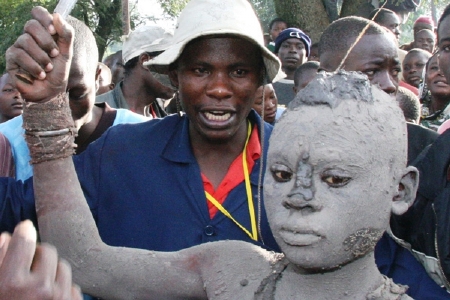
A young man being circumcised in Bungoma…Photo/Courtesy.
By I.P. Reporter
NAMISINDWA, UGANDA.
A horrifying circumcision mishap in Bushuma Village, Namisindwa District, has left a young man permanently maimed, sparking widespread condemnation and calls for stricter regulation of traditional practices.
The Incident:
Yokan Wonekha, an unregistered circumciser, allegedly severed the young man’s penis during a cultural Imbalu circumcision ceremony on November 28, 2024.
The event spiraled into chaos as enraged relatives and Kadodi dancers, armed with pangas and sticks, sought to attack Wonekha.
Quick action by local chairperson Stephen Matenga, who called the police, saved the circumciser from mob justice.
The victim is in critical condition at Butiru Chrisco Hospital, where medical personnel are working to stabilize him.
His father, Stephen Kitsala, is demanding legal action against Wonekha.
Community Reaction.
Fred Wamakoko, chair of the Bugisu region’s traditional surgeons’ body, condemned Wonekha’s actions, stating that he(Wonekha) was not among the 163 certified practitioners trained to conduct circumcisions safely.
“We caution families to only use registered circumcisers who follow professional and cultural guidelines,”
Wamakoko warned, citing similar risks from untrained individuals.
‘Wonekha’ in Lumasaaba means ‘spoilt one’.
Perhaps the meaning of the name is the route cause of his spoiled mission as a traditional surgeon.
Inzu Ya Masaaba, the cultural institution of both the Bagisu of Eastern Uganda and Babukusu of Western Kenya criticized the defiance of its circumcision roadmap, which was designed to minimize such incidents.
Stephen Masiga, spokesperson for the institution, urged stricter adherence to traditional regulations.
Cross-Border Concerns in Kenya:
The incident echoes similar tragedies among the Bukusu community in Bungoma County in Kenya.
On August 6, 2024, a 13-year-old boy lost his penis due to a botched circumcision performed with unsterilized tools by an untrained elder.
According to Bungoma County authorities, thousands of boys undergo circumcision annually, with nearly half opting for traditional methods.
Despite two yearly training sessions for circumcisers, incidents like infections, amputations, and even deaths persist.
Joseph Biketi Mafura an elder from Mayekwe in Bungoma West Sub county revealed that many circumcisers resist training, choosing to follow ancestral practices without modern medical safeguards.
“Such accidents highlight the urgent need for regulation and awareness campaigns,” she stated.
Calls for Action:
With the Luhya community preparing for their circumcision season starting December 1, cultural leaders and health officials are urging parents to prioritize their children’s safety.
The Ministry of Health in Kenya advises families to seek circumcision from health facilities or ensure traditional practitioners are certified and adhere to hygiene standards.
Over the past decade, reports have documented severe consequences of unregulated traditional circumcisions, including:
Amputations: Several boys in Kenya and Uganda have suffered genital amputations due to botched surgeries.
Infections: Poor hygiene has led to sepsis and even death.
HIV Spread: Unsterilized tools have contributed to HIV transmission during ceremonies.
Shared Heritage, Shared Responsibility:
The Bagisu of Uganda and Bukusu of Kenya, both descendants of patriarch Masaaba, insist on circumcision as a rite of passage into manhood.
However, experts emphasize the need for integrating safe medical practices into these deeply rooted cultural traditions.
By addressing these challenges collectively, both communities can preserve their heritage while safeguarding the lives of future generations.
Local leaders are calling for community-wide awareness campaigns, stricter registration for traditional surgeons, and collaboration between cultural institutions and health ministries to avert further tragedies.
Ends.



