


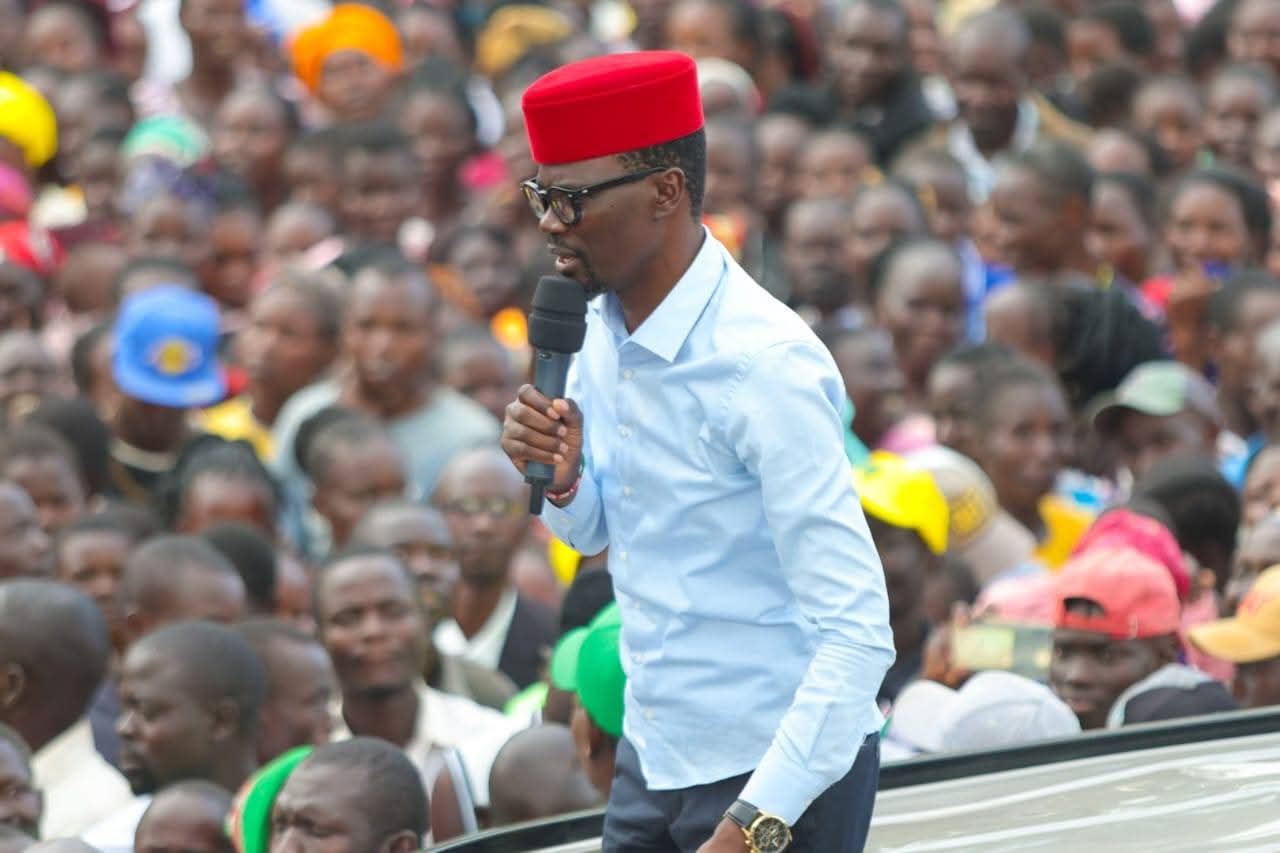
Kimilili MP Didmus Barasa…Photo/IP
By ALEX WEKESA
Kimilili Member of Parliament and Bungoma gubernatorial aspirant Didmus Barasa has called on residents of Bungoma County to elect leaders with a clear development agenda in the 2027 General Election, saying transformative leadership is key to improving the region’s socio-economic status.
Speaking during a burial ceremony in Sanandiki,Bungoma Central ,Barasa emphasized the need for leadership focused on tangible development outcomes rather than political longevity or party affiliations.
He noted that effective leadership should not be judged by the number of years one has held office or their political party, but by their ability to deliver meaningful change to the people.
He urged residents to make independent and informed decisions when choosing their leaders, cautioning against being influenced or manipulated.
According to him, the vote remains a powerful tool for change and should be exercised wisely to elect leaders who genuinely represent the interests of the electorate.
In his address, Barasa described himself as the most suitable candidate in the 2027 gubernatorial race, citing what he termed as a well-structured development agenda for the county.
He argued that Bungoma has lagged behind in development despite its vast potential and resources.
Barasa said his administration would prioritize key sectors such as agriculture, education, and social welfare.
He described agriculture as the backbone of Bungoma’s economy, stressing the need to empower farmers and enhance productivity to uplift livelihoods.
Among his proposals is a county-led program to purchase maize from farmers at KSh 20 per tin (korokoro), a move he said would guarantee a stable market and protect farmers from losses caused by fluctuating prices.
He added that his government would also ensure that residents benefit directly by selling maize back to them at subsidized rates during periods of high market prices, thereby easing the cost of living.
In the education sector, Barasa pledged to introduce a free school milk program targeting early childhood learners.
He said the initiative would improve school attendance while boosting the health and nutrition of young learners.
He further noted that in the event of insufficient milk supply, his administration would support local farmers by providing dairy cows to households, a move aimed at increasing milk production while simultaneously improving household incomes.
The Bungoma gubernatorial seat is already attracting a growing list of contenders, including Zacharia Baraza, former governor Wycliffe Wangamati, Westlands MP Tim Wanyonyi,Jimmy Nduruchi,Deputy Governor Janepher Mbatiany and Westlands MP Tim Wanyonyi, among others.
The expanding field signals what is expected to be a highly competitive race ahead of the 2027 polls.
The seat is set to fall vacant as the current governor Kenneth Lusaka prepares to complete his second and final term in office, opening the door for new leadership in one of Western Kenya’s key counties.
Barasa appealed to voters to support his bid and give him an opportunity to lead the county until 2032, arguing that meaningful development requires two full terms in office.
He maintained that a single term is insufficient to implement and sustain impactful policies.
He also took a swipe at long-serving leaders whom he accused of failing to deliver results, stating, “You find a leader who gets into office and stays there for more than 15 years without bringing any meaningful development,” adding that such leaders “should be sent home by the voters.”
At the same time, Barasa responded to criticism from Sirisia MP John Waluke, who has publicly questioned his capacity to lead the county.
Waluke recently suggested that Bungoma needs a more seasoned and experienced leader capable of safeguarding county resources.
Barasa dismissed the remarks, terming them as politically motivated and intended to mislead the public.
He insisted that he possesses the experience, vision, and capability needed to steer Bungoma toward sustainable development.
He also cautioned leaders against engaging in divisive politics, urging them instead to focus on policy-driven campaigns that address the needs of the people.



