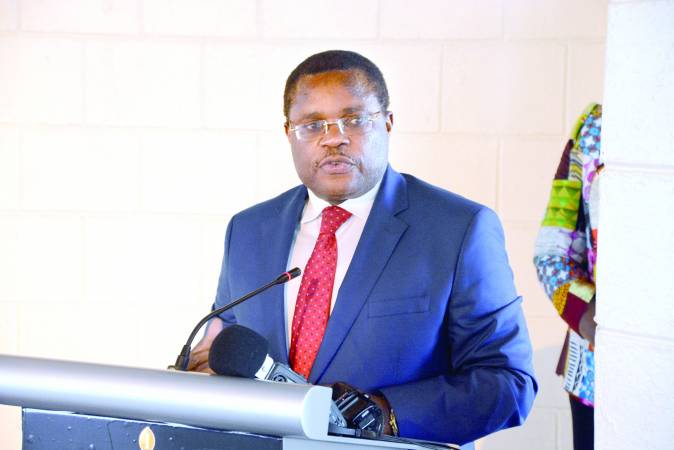
Bungoma Governor Ken Lusaka…Photo/File
NAIROBI, Kenya (IP)
Bungoma County’s own-source revenue collections have shown a troubling pattern of stagnation and decline, raising fresh concerns over the ability of rural counties to sustain themselves under Kenya’s devolved system.
The 2024/25 financial year, Bungoma collected approximately Sh1.12 billion, a figure that fell short of its projected targets and reflected ongoing inefficiencies in local revenue systems.
The first six months of the 2025/26 financial year it has collected sh 499.18 million.
The shortfall continued a trend seen over recent financial years, where ambitious projections have consistently outpaced actual collections.
In the current fiscal cycle, early figures suggest collections have either marginally improved or remained largely flat, with gains from minor reforms being offset by persistent leakages, weak enforcement and limited digitization of revenue streams.
County officials have pointed to expanded tax nets and automation efforts, but these have yet to translate into a significant jump in revenue performance.
Despite these challenges, Bungoma has set a more aggressive target of nearly Sh2 billion in upcoming financial plans—almost doubling last year’s collections.
The move signals optimism within the county government, but analysts warn the target may be overly ambitious without structural reforms.
The situation in Bungoma mirrors a broader national trend where rural, resource-endowed counties continue to underperform compared to urban centers.
While counties like Nairobi post billions in revenue, regions such as Bungoma struggle to convert agricultural productivity and local commerce into sustainable income streams.
Experts say the issue is not just about capacity but also about governance.
Inefficient collection systems, revenue leakages and resistance to taxation at the grassroots level continue to undermine progress.
At the same time, limited economic diversification in rural counties restricts the scope of taxable activities.
The result is a widening gap between potential and performance—one that threatens to deepen reliance on national government allocations.
As Bungoma and similar counties push forward with new revenue strategies, the key question remains whether reforms will finally reverse the trend—or whether the cycle of underperformance will persist.