


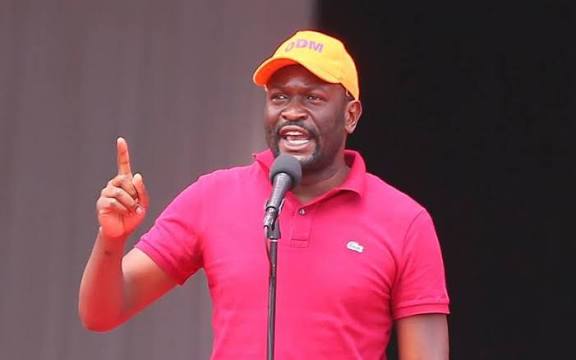
Nairobi Senator and ODM SG Edwin Sifuna…..Photo/IP
By Peter Mwibanda
For Intellectuals Post
NAIROBI
Edwin Sifuna Watenya does not tiptoe into Kenya’s political arena.
He kicks the door open, announces himself loudly and dares anyone to question his timing.
“Mimi ndio Sifuna,” he once declared with theatrical confidence—I am Sifuna, the ODM secretary general of the moment.
It was not just an introduction; it was a political philosophy.
Sifuna’s audacity is not accidental. It is cultivated, strategic and confrontational.
In a political ecosystem that often rewards silence, caution and ethnic arithmetic, Sifuna has chosen a different route: start the fire, fight the fire, and own the smoke.
A product of the University of Nairobi’s famously combative intellectual culture, Sifuna emerged from student politics and legal training with a sharp tongue and an appetite for public confrontation.
UoN has long produced political fighters—men and women who believe ideas are weapons and microphones are battlegrounds.
Sifuna fits neatly into that lineage. His politics are loud, performative and unapologetically elite in articulation, even when packaged as populist defiance.
As ODM secretary general, Sifuna has mastered the art of controlled disruption. He regularly ignites controversy—attacking state excesses, rebuking political rivals and occasionally unsettling allies—then positions himself as the rational firefighter sent to manage the blaze he helped start.
It is a risky tactic, but one that keeps him permanently relevant in a crowded opposition space struggling with coherence and direction.
Critics argue that Sifuna confuses activism with leadership. They accuse him of weaponizing outrage without offering institutional depth.
Supporters counter that in a political era defined by transactional silence, Sifuna’s belligerence is necessary. Both views may be true.
What is undeniable is that Sifuna has refused to be invisible.
His relationship with ODM leader Raila Odinga is equally instructive.
Sifuna projects fierce loyalty while subtly carving an independent identity.
He speaks with the confidence of a man who knows the old guard is fading but is not yet ready to surrender the stage.
In doing so, he positions himself as a bridge between ODM’s reformist past and its uncertain future—though at times he appears more interested in branding than building.
The danger in Sifuna’s approach lies in sustainability. Politics built on constant confrontation risks exhaustion—of allies, institutions and the public.
Firefighters who light too many matches eventually lose credibility as saviors.
As Sifuna eyes a larger national role, the question becomes whether he can transition from political arsonist-in-chief to statesman without muting the very voice that made him.
Kenya’s national politics is unforgiving to half-formed ambitions. It demands coalition-building, ethnic navigation and ideological clarity—areas where Sifuna remains a work in progress.
His urban appeal, legal sharpness and media fluency are assets. His impatience, rhetorical aggression and occasional self-indulgence are liabilities.
Still, Sifuna represents a new political species: assertive, media-native and impatient with ritual deference.
Whether he matures into a national leader or flames out as a permanent agitator will depend on his ability to evolve beyond spectacle into substance.
For now, one thing is certain: Edwin Sifuna does not wait to be invited into the conversation.
He interrupts it—loudly—and dares Kenya to deal with him.


